Your garage door protects one of the largest openings in your home. It shields your vehicles, adds security, improves energy efficiency, and boosts curb appeal. Yet many Florida homeowners are unsure whether their insurance policy will pay for repairs when the garage door is damaged.
That uncertainty often becomes a problem after a hurricane, severe thunderstorm, fallen tree, or accidental impact. Homeowners are left asking the same questions. Is this covered? Will I have to pay out of pocket? Should I repair the damage before filing a claim? How much is my deductible?
The answer depends on several factors, including the cause of the damage, your homeowners insurance policy, your deductible, and whether the event falls under a covered peril. Understanding these details before disaster strikes can save thousands of dollars and help you avoid costly claim mistakes.
This guide explains everything you need to know about garage door insurance coverage in Florida. You’ll learn which types of damage are commonly covered, what insurance companies often exclude, how hurricane claims work, what documentation you need, and when repairing or replacing your garage door makes the most financial sense.
Whether you live in Orlando or another part of Florida, this information can help you make informed decisions before and after garage door damage occurs.
Why Garage Door Damage Is a Major Concern in Florida
Florida experiences some of the most extreme weather conditions in the United States. Strong hurricanes, tropical storms, tornadoes, hailstorms, and heavy winds place enormous stress on residential garage doors every year.
Unlike many other exterior components, a garage door covers a wide opening. When it fails during severe weather, the pressure entering the garage can increase dramatically. This may contribute to additional structural damage to the roof or walls.
Organizations like FEMA emphasize the importance of properly reinforced garage doors because they are among the home’s most vulnerable entry points during hurricanes. Similarly, NOAA regularly tracks hurricane forecasts and wind events that affect Florida homeowners every storm season.
Weather is not the only risk.
Garage doors are also damaged by:
- Vehicles accidentally backing into the door
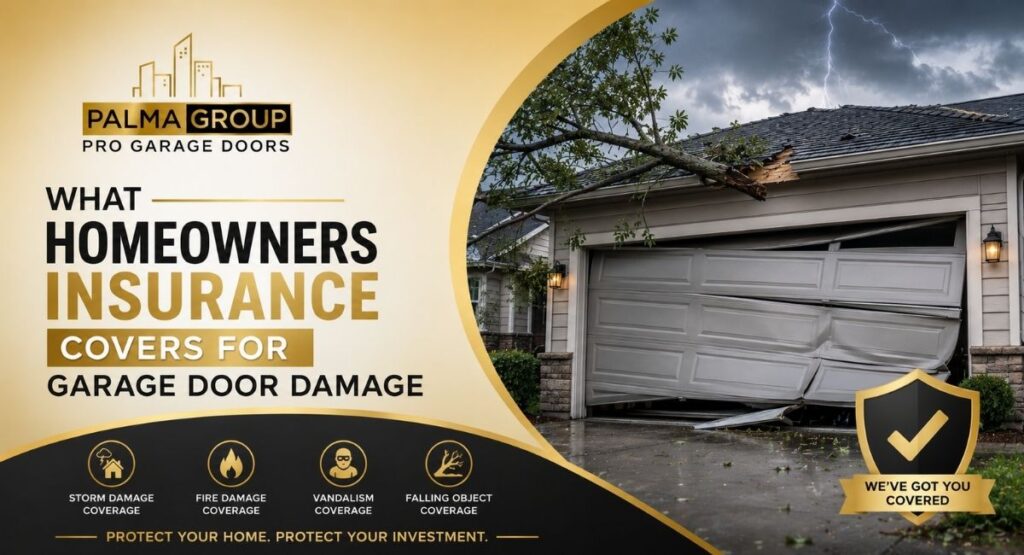
- Falling trees and large branches
- Flying storm debris
- Broken springs causing door collapse
- Garage door opener failures
- Vandalism
- Fire
- Lightning strikes
Not every situation qualifies for insurance coverage. That is why understanding your policy before filing a claim is essential.
Does Homeowners Insurance Cover Garage Door Damage?
In many situations, yes.
Most standard homeowners insurance policies provide coverage for garage door damage when it results from a covered peril listed in your policy.
A covered peril is an event specifically included in your insurance contract. If the damage results from one of these events, your insurer will typically pay for repairs or replacement after subtracting your deductible.
Common covered perils include:
| Covered Event | Usually Covered? | Notes |
| Windstorms | Yes | Depends on policy and hurricane deductible |
| Hurricanes | Usually | Subject to separate hurricane deductible |
| Fire | Yes | Common dwelling coverage |
| Lightning | Yes | Often includes electrical damage |
| Falling trees | Usually | If tree fell because of a covered event |
| Hail | Yes | Common storm damage claim |
| Vandalism | Often | Subject to policy terms |
| Vehicle impact | Often | Coverage depends on circumstances |
Coverage varies between insurance providers such as State Farm, Allstate, and other insurers operating in Florida. Policy endorsements, exclusions, and deductibles can differ significantly.
Reading your declarations page and dwelling coverage section provides the clearest picture of your protection.
How Garage Door Insurance Coverage Works in Florida
Understanding how claims work makes the process much less stressful.
Most garage doors fall under the dwelling portion of your homeowners insurance because they are attached to the home’s structure.
If your garage is attached to your house, damage is generally handled under Coverage A, also called Dwelling Coverage.
Detached garages are often covered under a separate section known as Other Structures Coverage.
Here is a simplified example.
Imagine a hurricane sends debris into your garage door.
The impact bends several panels, damages the track system, and destroys the opener.
Your contractor estimates repairs at $6,800.
Your hurricane deductible is $2,000.
If the damage qualifies under your policy, your insurance company may reimburse approximately $4,800 after the deductible, assuming no other policy limitations apply.
Every claim is unique, but this example illustrates how deductibles affect your reimbursement.
What Types of Garage Door Damage Are Usually Covered?
Many homeowners assume all garage door damage qualifies for insurance.
That is not true.
Insurance generally pays for sudden and accidental damage rather than gradual deterioration.
Below are the situations most commonly covered.
Wind Damage
Strong winds are among the leading causes of garage door insurance claims throughout Florida.
High winds may:
- Bend garage door panels
- Twist tracks
- Damage hinges
- Break rollers
- Pull doors off their tracks
- Damage garage door openers
- Cause complete door failure
When wind damage results from a covered storm, homeowners insurance often pays for repairs.
After severe weather, avoid operating a damaged garage door until it has been inspected. Continuing to use it may worsen the damage and complicate your claim.
If your door shows signs of structural problems after a storm, scheduling a professional inspection can help determine whether repairs are sufficient or if a complete Garage Door Roller Replacement in Coral Springs, FL or other structural repairs are necessary.Â
Hurricane Insurance Claims for Garage Doors
Hurricanes create unique insurance situations because Florida policies often include a separate hurricane deductible.
Instead of your standard deductible, hurricane claims may require homeowners to pay a percentage of their home’s insured value before insurance begins covering repairs.
For example:
A home insured for $500,000 with a 2 percent hurricane deductible would require the homeowner to pay the first $10,000 of covered hurricane damage.
This surprises many homeowners who expect only a flat deductible.
That is why reviewing your policy before hurricane season is important.
When filing hurricane insurance claims, insurance companies typically look for evidence showing:
- The storm directly caused the damage.
- The garage door was in reasonable condition before the storm.
- The homeowner took reasonable steps to prevent additional damage.
- Repair estimates support the claimed costs.
Photographs taken before hurricane season can become valuable evidence if damage occurs later.
Storm Damage Claims Beyond Hurricanes
Not every severe weather event qualifies as a hurricane.
Florida homeowners frequently file storm damage claims following:
- Severe thunderstorms
- Straight-line winds
- Tornadoes
- Microbursts
- Hailstorms
- Falling tree limbs
Although these claims may not involve hurricane deductibles, coverage still depends on the specific cause of loss.
For example:
A healthy tree blown onto your garage during a thunderstorm is commonly covered.
A tree that had been dead for years and eventually collapsed because of neglect may not receive the same treatment.
Insurance companies examine the facts surrounding every loss before making a coverage determination.
When Wind Damage Coverage Applies to Garage Doors
Windstorms are among the most common reasons homeowners file insurance claims in Florida. However, wind damage coverage is not automatic in every situation. Your insurer will review the cause of the damage, your policy language, and any applicable exclusions before approving a claim.
Here are a few common examples.
| Scenario | Likely Covered? | Reason |
| Strong winds bend garage door panels during a thunderstorm | Yes | Sudden damage from a covered peril |
| Hurricane debris destroys the garage door | Usually | Subject to hurricane deductible and policy terms |
| A tree falls on the garage because of high winds | Usually | Covered if the tree fell due to a covered event |
| Rusted hinges fail during moderate winds | Usually No | Wear and tear is not a covered peril |
| Garage door was already damaged before the storm | Limited or No | Pre-existing damage is generally excluded |
Even when coverage applies, the insurance company may ask for proof that the damage occurred during the reported weather event. Weather reports, timestamps on photographs, and repair inspections can all help support your claim.
What Homeowners Insurance Usually Does Not Cover
Many denied claims happen because homeowners assume every type of garage door damage is insured. Homeowners insurance is designed to protect against sudden, unexpected events, not ongoing maintenance issues.
Understanding policy exclusions can help you avoid costly surprises.
Normal Wear and Tear
Garage doors experience daily use. Springs weaken, rollers wear out, hinges loosen, and weather seals deteriorate over time.
Insurance companies generally consider these maintenance issues rather than accidental losses.
For example:
- Rusted tracks
- Worn rollers
- Aging torsion springs
- Faded paint
- Corroded hardware
These repairs are usually the homeowner’s responsibility.
If your door has become noisy or difficult to operate, routine maintenance may prevent more serious problems later.
Mechanical Failure
Garage door openers and moving components eventually fail through regular use.
If the opener motor stops working because it has reached the end of its lifespan, insurance normally does not cover replacement.
On the other hand, if lightning damages the electrical system and destroys the opener, the damage may qualify under your homeowners policy because lightning is typically a covered peril.
Lack of Maintenance
Insurance companies expect homeowners to maintain their property.
If an inspection shows the garage door was already unsafe because of neglected maintenance, the insurer may reduce or deny the claim.
Examples include:
- Broken cables that were never repaired
- Severely rusted tracks
- Loose mounting brackets
- Rotten wood framing around the garage opening
- Water damage that developed over several years
Keeping maintenance records can demonstrate responsible ownership if questions arise during the claims process.
Flood Damage
One of the biggest misconceptions in Florida involves flooding.
Standard homeowners insurance generally does not cover flood damage.
If rising floodwaters damage your garage door, coverage usually comes through a separate flood insurance policy, not your homeowners policy.
This distinction becomes especially important after hurricanes because storm surge often causes flooding.
Earth Movement
Damage caused by sinkholes, earthquakes, or land movement is generally excluded unless additional coverage has been purchased.
Some Florida homeowners choose supplemental protection depending on where they live.
Covered Perils That Commonly Affect Garage Doors
Insurance policies define specific events known as covered perils.
Although policies differ, these are among the most common perils that may apply to garage door damage.
Fire
Fire can completely destroy garage doors, tracks, insulation, and openers.
Most homeowners policies provide coverage for fire damage.
Lightning
Lightning may damage:
- Garage door openers
- Circuit boards
- Smart garage systems
- Electrical wiring
Electrical inspection may be required before repairs begin.
Falling Objects
Trees, branches, construction debris, and other falling objects often cause extensive garage door damage.
Coverage depends on why the object fell.
Explosion
Although uncommon, explosions from gas leaks or nearby incidents are typically covered under standard homeowners policies.
Vandalism
If someone intentionally damages your garage door, homeowners insurance often provides protection.
Filing a police report is usually recommended before submitting your insurance claim.
Vehicle Impact
This situation depends on who caused the accident.
For example:
If you accidentally back into your own garage door, homeowners insurance may or may not cover the damage depending on your policy.
If another driver crashes into your garage, their auto insurance may be responsible for paying the repair costs.
Replacement Cost vs. Actual Cash Value
One of the most important parts of your insurance policy is how your garage door is valued after a loss.
Many homeowners never notice this section until they file a claim.
There are two common valuation methods.
Replacement Cost
Replacement cost coverage pays the amount needed to repair or replace the damaged garage door with a comparable new one, without subtracting depreciation.
Example:
Your five-year-old insulated garage door costs $4,500 to replace.
If your policy provides replacement cost coverage, the insurer may pay nearly the full replacement amount after your deductible.
This type of coverage generally provides the strongest financial protection.
Actual Cash Value
Actual cash value considers depreciation.
Example:
The same garage door originally cost $4,500.
Because of age and normal use, the insurer determines its current value is $2,900.
After subtracting your deductible, your reimbursement could be much lower.
Reviewing this section of your policy before filing a claim helps you understand what reimbursement you can reasonably expect.
How Insurance Deductibles Affect Your Claim
Many homeowners focus on whether damage is covered but overlook insurance deductibles.
A deductible is the amount you pay before your insurance company contributes toward the repair.
There are several deductible structures commonly found in Florida.
Standard Deductible
This is often a fixed amount such as:
- $500
- $1,000
- $2,500
If repairs cost $4,000 and your deductible is $1,000, insurance may pay approximately $3,000, subject to policy terms.
Hurricane Deductible
Florida policies frequently include a separate hurricane deductible.
Instead of a fixed dollar amount, it is commonly based on a percentage of the insured value of your home.
For higher-value homes, this can significantly affect out-of-pocket expenses.
Before hurricane season begins, review your declarations page so you know exactly what deductible applies if a named storm causes garage door damage.
A Windstorm Claim in Orlando
Imagine a homeowner in Orlando experiences a severe summer thunderstorm.
Wind gusts exceed 70 mph, causing a large tree branch to strike the garage door.
The impact bends three panels, damages the track, and knocks the opener off its mounting bracket.
The homeowner immediately:
- Takes photographs from several angles.
- Covers the opening to prevent additional rain damage.
- Contacts the insurance company.
- Schedules a professional inspection.
- Saves all repair estimates.
Because the damage resulted from a covered wind event, the claim has a much stronger chance of approval than if the damage had developed gradually over several months.
The insurer will still inspect the property, but organized documentation often helps move the process forward more efficiently.
How to File a Garage Door Insurance Claim in Florida
Filing an insurance claim can feel overwhelming, especially after a major storm. Acting quickly and staying organized can make the process much smoother.
Insurance companies expect homeowners to take reasonable steps to protect the property from further damage while also preserving evidence of the original loss.
The following process works well for most garage door insurance claims.
Step 1: Make Safety Your Priority
A damaged garage door can become dangerous.
Do not try to force the door open or closed if it has come off its tracks or if the springs, cables, or panels appear damaged.
Watch for:
- Bent tracks
- Broken springs
- Frayed cables
- Loose panels
- Exposed electrical wiring
- Structural damage around the garage opening
If the garage door cannot be secured safely, use temporary measures such as boarding the opening until repairs begin.
Step 2: Document the Damage Thoroughly
Good claim documentation is often one of the biggest factors in a successful insurance claim.
Take clear photographs before moving or repairing anything.
Capture:
- The entire garage door
- Close-up images of damaged panels
- Bent tracks
- Broken rollers
- Damaged opener
- Impact marks
- Debris that caused the damage
- Interior damage if rain entered the garage
If possible, include photos taken before the storm that show the garage door was in good condition.
Videos can also help demonstrate damage that photographs may not fully capture.
Step 3: Prevent Additional Damage
Most insurance policies require homeowners to take reasonable steps to prevent further loss.
Examples include:
- Covering broken openings
- Removing dangerous debris
- Preventing water intrusion
- Protecting belongings inside the garage
Keep receipts for temporary repairs because many policies reimburse reasonable emergency expenses.
Step 4: Contact Your Insurance Company
Report the damage as soon as practical.
Be prepared to provide:
- Policy number
- Date of loss
- Cause of damage
- Brief description
- Photographs
- Emergency repair receipts
The insurance representative will explain the next steps and assign an insurance adjuster if needed.
Step 5: Schedule a Professional Garage Door Inspection
Insurance adjusters determine coverage, but they are not garage door repair specialists.
A detailed inspection from an experienced garage door contractor can provide valuable information about:
- Structural damage
- Hidden component failures
- Repair feasibility
- Replacement recommendations
- Estimated costs
Having an independent inspection often helps ensure that all damaged components are identified, not just the obvious ones.
If the inspection shows that multiple components have failed, professional garage door spring replacement or garage door opener replacement services may be recommended instead of isolated repairs.
What Does an Insurance Adjuster Look For?
An insurance adjuster investigates the claim to determine whether the policy covers the damage and how much the insurer should pay.
Their evaluation typically includes several key questions.
What Caused the Damage?
The adjuster determines whether the loss resulted from a covered peril such as:
- Windstorm
- Hurricane
- Fire
- Falling tree
- Lightning
- Vandalism
If the cause falls under a policy exclusion, coverage may be denied.
Was the Damage Sudden?
Insurance is intended for unexpected events.
If the adjuster determines the damage developed gradually over months or years, the claim may not qualify.
Was the Garage Door Properly Maintained?
The condition of the garage door before the incident matters.
The adjuster may look for signs of:
- Rust
- Corrosion
- Rot
- Previous repairs
- Poor maintenance
- Existing structural issues
Maintenance records and inspection reports can strengthen your position if questions arise.
Is Repair Possible?
Not every damaged garage door requires complete replacement.
The adjuster may compare:
- Repair cost
- Replacement cost
- Safety concerns
- Availability of matching panels
Sometimes replacing a single section is practical.
In other cases, replacing the entire door provides a safer and more cost-effective solution.
If matching replacement panels are no longer manufactured, insurers may approve full replacement instead of partial repairs.
Common Reasons Garage Door Insurance Claims Are Denied
Understanding why claims are denied can help you avoid preventable mistakes.
The Damage Was Due to Wear and Tear
This remains one of the most common reasons for denial.
Examples include:
- Aging springs
- Rusted rollers
- Corroded hinges
- Worn weather stripping
- Faded finishes
These conditions are considered maintenance issues rather than insured losses.
Lack of Evidence
Without sufficient documentation, proving the cause of damage becomes much more difficult.
Missing photographs, incomplete repair estimates, or delayed reporting can slow the claims process or reduce the likelihood of approval.
Pre-existing Damage
If inspection reveals the garage door was already damaged before the reported event, insurance may only cover the new damage or deny the claim entirely.
Keeping periodic photographs of your home’s exterior can help establish the condition before storms occur.
Delayed Reporting
Waiting several weeks before notifying your insurance company can create unnecessary complications.
Prompt reporting allows the insurer to inspect the property before additional deterioration occurs.
Maintenance Neglect
If poor maintenance directly contributed to the failure, the insurer may determine the damage was preventable.
Routine inspections reduce this risk while also extending the lifespan of the garage door.
Repair or Replace? Making the Right Decision
After a claim is approved, homeowners often wonder whether repairing the existing garage door is enough or whether replacement offers better long-term value.
The answer depends on the extent of the damage.
Repair May Be the Better Choice When:
- Only one or two panels are damaged.
- Tracks remain straight.
- The opener still functions properly.
- Replacement parts are available.
- Structural integrity has not been compromised.
Replacement May Be the Better Choice When:
- Multiple panels are bent.
- The frame has shifted.
- Tracks are severely twisted.
- The opener and safety systems are damaged.
- Matching replacement sections are unavailable.
- The door is already nearing the end of its service life.
If your existing garage door is more than 15 to 20 years old, replacement may offer better value through improved durability, energy efficiency, and hurricane resistance.
For homeowners considering this option, Our guide on how a new garage door can increase home’s value explains how modern garage doors can improve both resale appeal and everyday performance.
Likewise, if you’re wondering whether it’s worth repairing an older system, the article on garage doors lifespan provides useful guidance on expected service life and replacement timing.
Choosing a Qualified Garage Door Contractor
Insurance may cover the cost of repairs, but selecting the right contractor remains your responsibility.
Look for a company that offers:
- Licensed and insured technicians
- Experience with insurance-related repairs
- Detailed written estimates
- High-quality replacement parts
- Manufacturer warranties
- Knowledge of Florida building codes
- Hurricane-rated garage door options
Ask whether the contractor has experience working with insurance companies and providing documentation that supports claims. Clear estimates and thorough inspection reports can help avoid delays during the approval process.
How to Reduce the Risk of Future Garage Door Insurance Claims
While homeowners insurance provides valuable financial protection, preventing damage is always the better option. Florida’s climate presents unique challenges, but regular maintenance and timely upgrades can significantly reduce the likelihood of costly repairs.
Schedule Routine Inspections
Inspect your garage door at least twice a year, and always perform an additional inspection before hurricane season.
Look for:
- Loose bolts and brackets
- Rust on springs and cables
- Bent tracks
- Cracked or dented panels
- Worn rollers
- Damaged weather seals
- Unusual noises during operation
Addressing small issues early can prevent larger mechanical failures and improve the door’s ability to withstand strong winds.
If your garage door has become noisy or difficult to operate, routine servicing can often resolve the issue before it leads to expensive repairs. Our guide on garage door maintenance checklist provides a practical seasonal maintenance routine for Florida homeowners.
Upgrade to a Hurricane-Rated Garage Door
Older garage doors may not meet current Florida wind load requirements.
Modern hurricane-rated garage doors are designed to withstand stronger wind pressures and flying debris. They also help reduce the risk of structural damage if severe weather compromises the garage opening.
Benefits include:
- Improved wind resistance
- Better home protection
- Increased energy efficiency
- Enhanced curb appeal
- Potential insurance discounts from some providers
If your existing door has reached the end of its service life, investing in a new garage door installation in Parkland, FL can improve both safety and long-term value.
Replace Worn Components Promptly
Many major failures begin with small mechanical problems.
Replace worn parts such as:
- Springs
- Rollers
- Cables
- Hinges
- Weather seals
Ignoring these components can increase stress on the entire garage door system.
For example, damaged rollers may place additional strain on the tracks and opener, eventually leading to more extensive repairs. Professional garage door roller replacement can help maintain smooth operation and reduce unnecessary wear on other components.
Keep Maintenance Records
Maintain a simple folder containing:
- Inspection reports
- Repair invoices
- Replacement receipts
- Before-and-after photographs
- Warranty documents
These records can support future insurance claims by demonstrating that the garage door was properly maintained before the loss occurred.
Prepare Before Hurricane Season
Every year, Florida homeowners should complete a basic storm readiness checklist.
This includes:
- Testing the garage door opener
- Checking emergency release functions
- Tightening loose hardware
- Trimming nearby tree branches
- Securing outdoor furniture
- Inspecting weather seals
- Verifying that reinforcement systems are functioning correctly
Taking these steps before severe weather arrives is often far less expensive than repairing storm-related damage afterward.
Frequently Asked Questions
Does homeowners insurance cover garage door damage caused by hurricanes?
In many cases, yes. Damage caused by hurricanes is often covered if your policy includes windstorm protection. However, Florida homeowners should review their hurricane deductible because it is frequently separate from the standard deductible.
Is accidental garage door damage covered by insurance?
It depends on how the damage occurred.
Some forms of accidental damage, such as a tree falling onto the garage during a storm, are commonly covered. Damage resulting from maintenance issues or normal wear is generally excluded.
If a vehicle strikes the garage door, the responsible driver’s auto insurance may also play a role.
Will insurance pay to replace my entire garage door?
Insurance may cover a full replacement if repairs are not practical, matching panels are unavailable, or the structural integrity of the door has been compromised.The decision depends on your policy, the extent of the damage, and the insurer’s assessment.
Should I repair the garage door before the insurance adjuster arrives?
Only temporary emergency repairs should be completed before the inspection.
Your priority should be preventing additional damage while preserving evidence of the original loss.
Always document the damage thoroughly before making temporary repairs.
How long does a garage door insurance claim usually take?
Every claim is different.
Simple claims may be resolved within a few weeks, while large hurricane-related claims can take longer because insurers receive thousands of claims following major storms.Providing complete documentation and responding quickly to requests can help shorten the process.
Can regular maintenance help avoid denied claims?
Yes.Routine inspections and timely repairs demonstrate responsible homeownership. Maintenance records can also support your claim if the insurer questions the condition of the garage door before the loss occurred.
Final Thoughts
Garage door damage is more than a cosmetic issue. A compromised garage door can affect your home’s security, structural integrity, and ability to withstand Florida’s unpredictable weather.
Understanding garage door insurance coverage in Florida before damage occurs allows you to make informed decisions when severe weather, accidents, or unexpected events happen. Knowing which covered perils are included, how insurance deductibles apply, and what documentation insurers expect can make the claims process much smoother.
Not every repair will qualify for insurance, and every policy contains unique terms and exclusions. Reviewing your homeowners policy annually, maintaining your garage door, and addressing small problems before they become major failures are practical steps that can protect both your home and your finances.
When repairs or replacement become necessary, working with experienced professionals ensures that your garage door is restored safely and in compliance with Florida building standards.
Need Professional Garage Door Repair or Replacement?
Whether your garage door has been damaged by a hurricane, high winds, falling debris, or another covered event, Palma Group Pro Garage Doors is ready to help. From detailed inspections and insurance-related repair estimates to complete garage door spring replacement, garage door opener replacement, and new garage door installation, our experienced team delivers dependable solutions tailored to Florida homeowners.
Visit our website to schedule an inspection or request professional garage door service from a certified local team.