




A garage door is one of the largest moving systems in any home, yet it is often ignored until something breaks or a full replacement becomes necessary. It protects vehicles, secures storage, and directly impacts both safety and curb appeal.
Many homeowners search for how to install a garage door because they want to understand the process before starting a DIY project or hiring a professional. At first glance, it may look like a simple assembly job. In reality, it involves precise alignment, heavy components, tension-loaded springs, and mechanical balance that must be exact for safe operation.
Understanding garage door installation instructions gives you clarity on how the system works and where most mistakes happen. It also helps you decide when a project is manageable and when it is better to rely on professional support, especially for complex systems.
Understanding the Garage Door System Before Installation
Before learning how do you install a garage door, it is important to understand what you are working with. A garage door is not a single unit but a complete mechanical system where every part depends on the others.
The door moves along steel tracks using roller wheels, while the weight is balanced by a spring system. Without this balance, lifting the door manually would be extremely difficult. Most modern systems also include automatic openers from manufacturers like LiftMaster and Genie, which add convenience but also increase installation complexity.
For homeowners dealing with upgrades or full replacements, professional solutions like new garage door installation service fl are often used to ensure the system is installed correctly from the beginning.
Tools and Preparation Work
Proper preparation makes the entire installation process smoother. Most installation problems happen due to missing tools or poor setup rather than mechanical difficulty.
A basic toolkit includes a power drill, socket wrench set, level tool, measuring tape, clamps, and a sturdy ladder. Safety gloves and protective eyewear are also important because some components are heavy and under tension.
Before starting, the garage opening should be measured carefully. The frame must be level, square, and structurally sound. Even small inconsistencies can affect how the door moves on its tracks.
If an old system is being removed, it should be dismantled carefully, especially the spring system, which stores high tension energy.
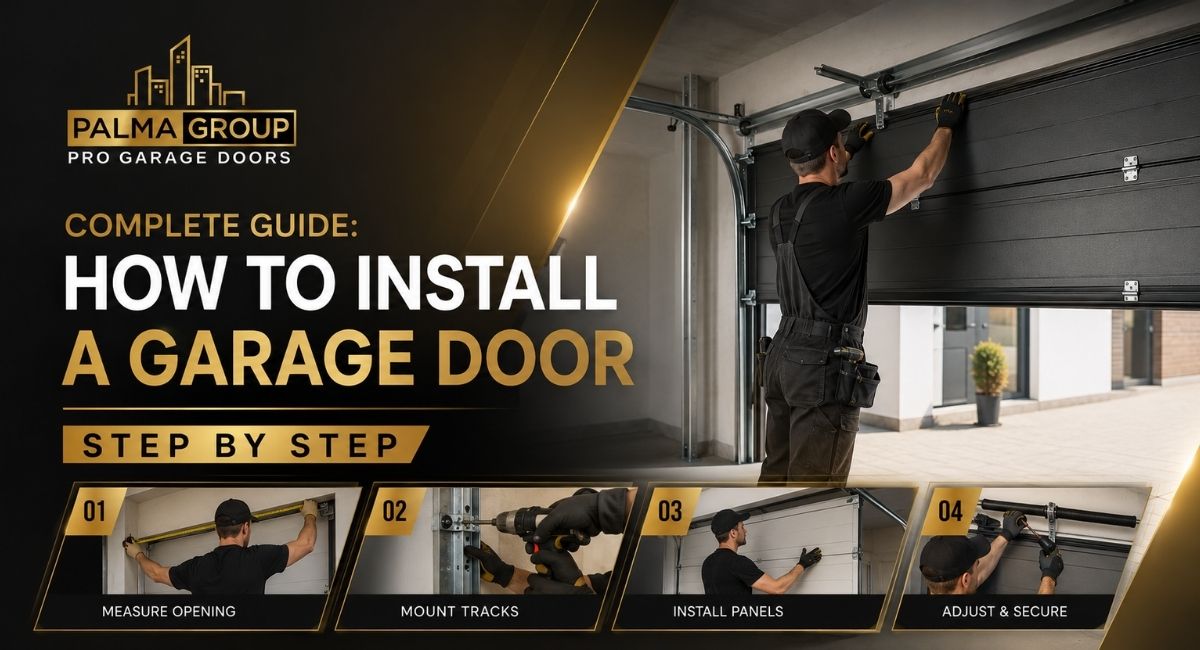
Garage Door Installation Instructions Step by Step
Step 1: Installing the Bottom Panel
The installation always begins with the bottom section of the door. This panel sets the foundation for the entire structure, so alignment is critical.
Weather stripping is attached first to seal the gap between the floor and the door. The panel is then placed into position and leveled before temporary securing.
Step 2: Adding Hinges and Rollers
Once the base is stable, hinges are attached to connect future panels. Roller wheels are inserted into side brackets and guided into the vertical tracks. These rollers allow the door to move smoothly during operation.
Step 3: Installing Vertical Tracks
Vertical tracks are mounted on both sides of the garage frame. They must be aligned precisely to avoid friction or binding. A slight misalignment here can affect the entire system’s performance.
Step 4: Assembling Door Panels
Each additional panel is stacked above the previous one and connected using hinges. Rollers are inserted into the track system as the structure rises. This process continues until the full height of the door is assembled.
At this stage, checking alignment repeatedly is important to prevent issues later in the system.
Step 5: Installing Horizontal Tracks
Once all panels are in place, the tracks extend horizontally along the ceiling. This allows the door to roll back smoothly when opened. The curve between vertical and horizontal tracks must be smooth and correctly positioned.
Step 6: Installing the Spring System
The spring system is one of the most critical parts of the entire installation. It balances the weight of the door and ensures smooth lifting and lowering.
Most modern systems use torsion springs mounted above the door. Incorrect installation or tension adjustment can create serious safety risks and performance issues. This is why many homeowners rely on specialized services such as professional garage door spring replacement services when dealing with spring-related work.
Step 7: Installing the Garage Door Opener
If an automatic system is included, the opener is mounted on the ceiling and connected to the door arm. Safety sensors are installed near the floor to prevent accidents by detecting obstacles.
Brands like Chamberlain, LiftMaster, and Genie are commonly used due to their reliability and smart features. If an opener system becomes outdated or fails, professional garage door opener replacement services are often recommended for older units instead of repeated repairs.
Step 8: Testing and Final Adjustment
After installation, the system must be tested carefully. A properly balanced door should remain in place when lifted halfway manually. If it moves on its own, spring adjustment is required.
The opener is also tested several times to ensure smooth, quiet operation. Small adjustments to tracks or rollers are often made at this stage.
Garage Door Tools and Their Purpose
| Tool | Purpose |
| Power drill | Secures brackets and fasteners |
| Socket wrench set | Tightens bolts and hardware |
| Level tool | Ensures track and panel alignment |
| Measuring tape | Provides accurate spacing |
| Ladder | Accesses upper installation areas |
Key Garage Door Components
| Component | Function |
| Panels | Form the main structure of the door |
| Tracks | Guide door movement |
| Rollers | Enable smooth sliding |
| Springs | Balance door weight |
| Opener | Automates operation |
Common Installation Mistakes to Avoid
One of the most common mistakes during installation is misaligned tracks. Even a small deviation can cause friction, noise, or long-term wear.
Another frequent issue is incorrect spring tension, which affects both safety and performance. Loose or uneven fastening can also lead to vibration and instability over time.
Many of these problems appear during or after DIY installations, which is why homeowners often turn to professional support through garage door roller replacement services in FL or opt for full garage door installation and repair services when issues persist.
DIY vs Professional Installation
Installing a garage door yourself may reduce upfront costs, but it requires precision and patience. The most challenging part is not assembling panels but balancing the system correctly.
Professional installation ensures accuracy, safety, and long-term reliability. It also includes proper calibration, testing, and warranty-backed work.
| Factor | DIY Installation | Professional Installation |
| Cost | Lower upfront cost | Higher upfront cost |
| Safety | Higher risk | Professionally managed |
| Time | 1–3 days | Few hours |
| Accuracy | Skill-dependent | High precision |
| Warranty | Limited | Usually included |
Maintenance After Installation
After installation, regular maintenance keeps the system working smoothly for years. Tracks should remain clean, rollers should be lubricated, and all hardware should be checked periodically for looseness.
Springs and cables should also be inspected for wear. Small preventive steps help avoid major repairs later and extend the life of the system.
A structured maintenance approach similar to the garage door maintenance checklist guide helps homeowners keep everything in proper working condition.
Choosing the Right Approach for Your Garage Door Installation
Installing a garage door is a precise mechanical process that requires careful alignment, safety awareness, and technical understanding. While it is possible to complete it as a DIY project, the complexity of springs, tracks, and balancing systems makes it challenging for most homeowners.
For long-term reliability and safety, professional installation is often the better choice. Expert technicians ensure correct setup, smooth operation, and proper system calibration from the beginning.
If you are planning a new installation or replacing an old system, you can explore professional garage door installation and replacement services at Palma Group FL for complete garage door solutions.
A properly installed garage door is not just a functional upgrade. It is a long-term investment in safety, convenience, and home protection.