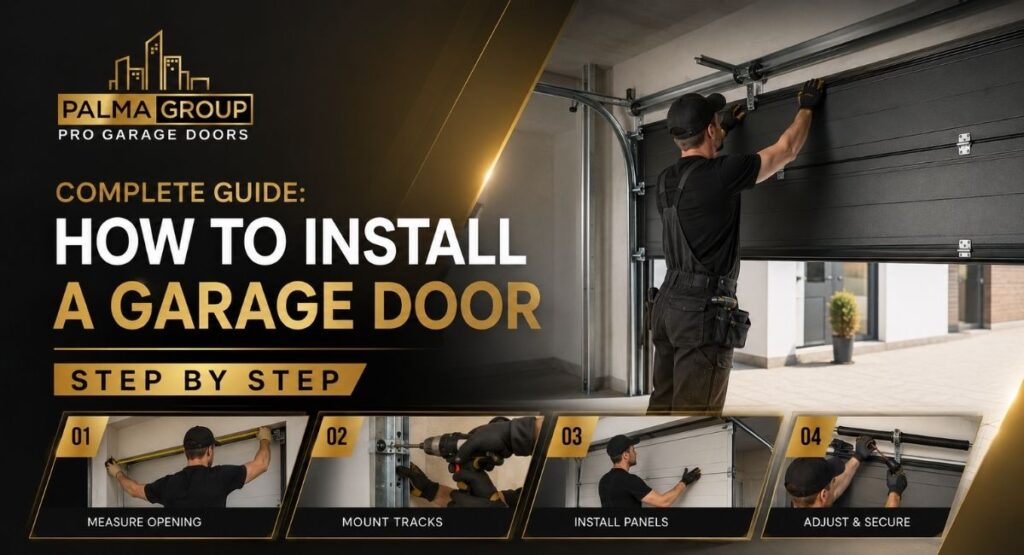
A garage door looks like a simple build. Stack some panels, bolt on a track, add an opener. In practice, it is a heavy, tightly balanced system. A small error in alignment can make the door noisy, stiff or unsafe.
This guide walks through the full installation in order. It covers measuring, tools, panels, tracks, springs, the opener and testing. It also shows where mistakes happen, so you can judge how much of the job to take on.
The springs hold a lot of stored energy, and the door can weigh several hundred pounds. Read each step before you start.
What Makes Up A Garage Door System
A garage door is a set of parts that depend on each other. If one is off, the rest suffer.
| Component | Function |
| Panels | Form the body of the door |
| Hinges | Join the panels and let them bend at the track curve |
| Rollers | Roll inside the tracks |
| Tracks | Guide the door up and back along the ceiling |
| Springs | Balance the weight of the door |
| Cables and drums | Transfer spring force to the door |
| Opener | Moves the door and powers the safety sensors |
The springs do the lifting. The opener only guides a balanced door. If the balance is wrong, the opener ends up carrying weight it was never built for.
Door material changes the weight and the spring size. Steel, aluminum and wood doors all behave differently during installation.
Measuring And Checking The Opening
Measure before you order or unbox anything. Most installation problems start here.
- Width. Measure the opening at its widest and narrowest points.
- Height. Measure from the floor to the top of the opening.
- Headroom. This is the space above the opening. A torsion system typically needs about 12 inches. Check the maker’s spec for your door.
- Side room. The tracks need clear wall space on each side.
- Backroom. The horizontal tracks need depth, usually the door height plus extra room for the opener.
Then check the frame. The floor should be level. The jambs should be flat, straight and solid. Rotted wood should be replaced first, because the track brackets need something firm to bite into.
Tools And Materials
| Tool | Purpose |
| Power drill | Drives screws and fasteners |
| Socket wrench set | Tightens bolts and brackets |
| Level | Checks panel and track alignment |
| Tape measure | Gives accurate spacing |
| Clamps and locking pliers | Hold panels and tracks in place |
| Stable ladder | Reaches the upper tracks |
| Winding bars | Wind torsion springs |
| Safety glasses and gloves | Protect eyes and hands |
A second person makes the job safer. Panels are long and awkward. They are hard to hold level alone.
Removing The Old Door Safely
If you are replacing a door, the old one has to come out first. This is the riskiest stage.
- Unplug the opener and disconnect it from the door.
- Lock the door in the closed position so it cannot move.
- Release the spring tension before you touch any bracket or cable. Use winding bars, never screwdrivers.
- Take the door apart from the top panel down.
- Remove the tracks and hardware last.
Unwinding a torsion spring is the step that injures people. How to replace a garage door spring in Florida explains the process in detail.
Installing The Door, Step By Step
Work in this order. Each step sets up the next.
- Set the bottom panel. Attach the weather seal first. Place the panel in the opening, level it and hold it in place. Everything above it depends on this panel being true.
- Add hinges and rollers. Fit the hinges along the panel edge. Slide rollers into the end hinges.
- Mount the vertical tracks. Guide the rollers into the tracks. Fasten the tracks to the jambs. Keep both tracks plumb and the same distance from the door.
- Stack the panels. Set each panel on the one below. Join them with hinges. Seat the rollers in the tracks as the door rises. Check level again after every panel.
- Install the horizontal tracks. Join them to the vertical tracks at the curve. Hang the rear ends from the ceiling with brackets. The two sides must match.
- Fit the spring system. Mount the shaft, drums and torsion springs above the door. Run the cables from the drums to the bottom brackets. Wind the springs to the maker’s turn count. This is the dangerous step.
- Check the balance. Lift the door halfway by hand. It should stay where you leave it.
Step 6 is where a pause is worth it. If you are unsure about winding, stop here and bring in a technician.
Setting Up The Opener
Install the opener only after the door is balanced. Mount the rail to the header and the motor unit to the ceiling. Connect the door arm to the top panel.
Then add the safety sensors. Mount them a few inches above the floor, one on each side of the opening, facing each other. They stop the door if something crosses the beam.
Set the travel limits and the closing force by following the opener’s manual. If the unit is old or keeps failing, garage door opener replacement in Florida is worth considering before repeating repairs.
Testing And Final Adjustments
Run these checks before you call the job done:
- Balance test. Disconnect the opener. Lift the door halfway. It should hold. If it rises or sinks, the spring tension needs adjusting.
- Full cycles. Open and close the door several times. Listen for grinding, scraping or jerking.
- Auto-reverse test. Lay a board flat on the floor in the door’s path. The door should reverse when it touches the board.
- Sensor test. Wave an object through the beam while the door is closing. The door should stop and reverse.
- Hardware check. Tighten any bolt that moved during the first cycles.
Small tweaks to the tracks or rollers are normal at this stage.
Mistakes That Cause Trouble Later
- Tracks out of alignment. A small shift causes friction, noise and early wear.
- Wrong spring tension. Too little leaves the opener doing the lifting. Too much strains the cables and hinges.
- A frame that is not level. The door will bind or drift.
- Loose or uneven fasteners. They lead to vibration and play in the tracks.
- Skipping the final tests. Faults hide until the door is in daily use.
Several of these show up as noise, sticking or uneven movement in the first months.
DIY Or Professional Installation?
Assembling panels is the easy part. Balancing the springs is the hard part.
| Factor | DIY | Professional |
| Upfront cost | Lower | Higher |
| Safety risk | Higher, mainly from the springs | Handled by trained technicians |
| Time | Longer for a first attempt | Shorter |
| Accuracy | Depends on your skill and tools | Calibrated and tested |
| Warranty | May be limited if the install is not by an approved installer | Usually covered |
For a closer look at timing, read how long it takes to install a garage door. Check the manufacturer’s warranty terms before you decide, since some require a professional install.
Care After Installation
A new door lasts longer with light, regular care.
- Keep the tracks clean.
- Lubricate rollers, hinges and springs with a garage door lubricant.
- Check bolts and brackets for looseness.
- Look at the springs and cables for rust and fraying.
- Test the balance and the auto-reverse every few months.
The garage door maintenance checklist lays out a full schedule.
Common FAQs About Installing Garage Doors
What is the first step in installing a garage door?
Measure the opening and check that the frame is level, square and solid.
Which part is installed first?
The bottom panel. It sets the line for every panel above it.
Can one person install a garage door?
It is possible, but a helper makes it safer. The panels are long, and the spring work carries real risk.
When is the opener installed?
After the door is hung and balanced. Installing it earlier hides balance problems.
How do I know the installation is correct?
The door lifts smoothly, stays put at the halfway point, runs quietly and reverses on contact.
Choosing How To Do The Job
Installing a garage door takes care at every stage. Measuring, alignment and spring balance decide how well it works for years.
If you take on the build yourself, hand the spring winding to someone with the right bars and training. If you prefer to leave the whole job to a technician, new garage door installation in Florida covers it from removal to testing.
Local help is available for garage door installation in Coral Springs FL and new garage door installation in Naples FL across Florida.