



A garage door spring usually fails without much warning. One day your garage door opens smoothly. The next morning, you hear a loud snap from the garage, and suddenly the door refuses to lift.
For many homeowners across South and Southwest Florida, especially in places like Boca Raton, Garage Door Repair in Naples, Coral Springs, Coconut Creek, and Boynton Beach, garage doors work harder than most people realize. Heat, humidity, salt air, and daily use place continuous pressure on springs, cables, rollers, and openers.
When a spring breaks, the entire garage door system becomes unstable. The door may feel extremely heavy, the opener may strain, or the door may slam shut unexpectedly.
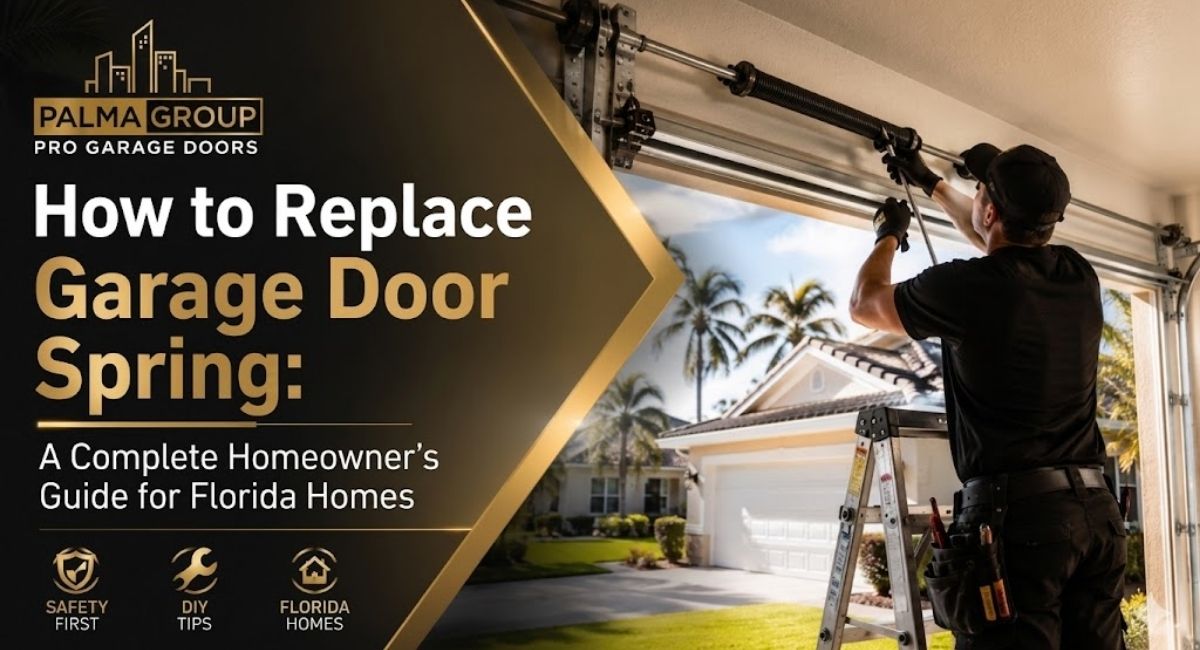
That is why so many Florida homeowners start researching garage door spring issues the moment the door becomes noisy, heavy, or uneven. Some want to understand how spring adjustment works, while others are trying to figure out whether a broken torsion spring can be replaced safely without damaging the opener, cables, or tracks. In many cases, homeowners simply want to know if the problem can be fixed before the entire garage door system fails. This guide explains the full process in practical detail. You will learn how garage door springs work, how to identify the type installed on your door, what tools are required, the dangers involved, and when DIY replacement is realistic versus when professional help is the safer option.
You will also understand why Florida weather affects garage door systems differently than other regions and how regular maintenance can extend the life of your springs.
Why Garage Door Springs Are Essential for Safe, Reliable Operation
Garage door springs do the heavy lifting.
Most residential garage doors weigh between 130 and 400 pounds. Without springs, lifting that weight manually would be nearly impossible.
The spring system counterbalances the door’s weight so the opener and the homeowner only handle a small portion of the load.
When springs wear out or break, several problems happen immediately:
- The opener motor experiences excessive strain
- The garage door becomes uneven
- The cables may loosen or snap
- The rollers can jump tracks
- The door may become dangerous to operate
In Florida, especially coastal regions, corrosion speeds up spring deterioration. Salt-heavy air in places like Naples and Boca Raton often shortens spring lifespan compared to inland regions.
Homeowners who ignore spring issues often end up paying for additional repairs such as cable replacement, opener replacement, or full track realignment.
If your garage door is already making unusual noises, lifting unevenly, or struggling to close completely, this guide on the top signs your garage door needs repair can help you identify early warning signs before the problem becomes more expensive.
Common Signs Your Garage Door Spring Is Broken
A broken spring usually creates obvious symptoms.
The Door Feels Extremely Heavy
If you disconnect the opener and attempt to lift the door manually, it may feel almost impossible to move.
That means the springs are no longer counterbalancing the weight.
Loud Bang in the Garage
Many homeowners describe the sound as similar to a firecracker or gunshot.
That noise usually occurs when a torsion spring snaps under tension.
Garage Door Opens Crooked
One side may rise higher than the other.
This often means one spring has failed while the second spring still works.
Door Stops Halfway
The opener may struggle and reverse direction because the spring system cannot support the load.
Visible Gap in the Spring
A torsion spring with a two to three inch separation is clearly broken.
Jerky or Uneven Motion
Worn springs lose tension over time before fully failing.
If your garage door shakes excessively, spring fatigue may already be developing.
If your garage door suddenly stops responding after a spring failure, this article explains why your garage door is not opening and covers several related causes homeowners commonly face.
Can You Replace Garage Door Springs Yourself?
This is the most important question.
Technically, yes.
Realistically, it depends on:
- Your mechanical experience
- The type of spring system
- Your tools
- Your understanding of garage door tension systems
- Your comfort level with safety risks
Torsion springs are under extremely high tension.
Improper handling can cause:
- Hand injuries
- Broken fingers
- Eye injuries
- Deep cuts
- Falling garage doors
- Shaft release accidents
The United States Consumer Product Safety Commission has documented many garage door related injuries involving spring replacement.
For homeowners with limited mechanical experience, hiring a professional garage door technician is usually the safer decision.
Still, understanding the process helps homeowners make informed decisions and recognize whether a repair company is performing proper work.
Tools Required to Replace Garage Door Springs
If you decide to replace springs yourself, preparation matters.
Here are the standard tools required.
| Tool | Purpose |
| Winding bars | Safely wind and unwind torsion springs |
| Vice grips | Secure torsion shaft and tracks |
| Adjustable wrench | Loosen and tighten hardware |
| Socket set | Remove brackets and bolts |
| Ladder | Access upper spring assembly |
| Safety glasses | Protect eyes from debris |
| Gloves | Improve grip and reduce cuts |
| Tape measure | Measure spring dimensions |
| Marker | Mark shaft alignment |
Never use screwdrivers instead of winding bars.
This is one of the most common causes of injury during DIY garage door spring replacement.
How to Identify the Correct Replacement Spring
Using the wrong spring creates serious problems.
A spring that is too strong can cause the door to fly upward.
A spring that is too weak can overload the opener.
Measurements You Need
For torsion springs, measure:
- Wire size
- Inside diameter
- Overall length
- Wind direction
How to Measure Wire Size
Measure 20 coils and divide by 20.
Example:
- 20 coils measure 5 inches
- 5 divided by 20 = 0.250 wire size
Determining Wind Direction
- Right wind springs usually mount on the left side
- Left wind springs usually mount on the right side
This confuses many homeowners.
Never guess.
If the measurements are wrong, the garage door balance will fail.
How to Replace Garage Door Torsion Spring Step by Step
This section explains the standard process for torsion spring replacement.
Read every step completely before starting.
Step 1: Disconnect the Garage Door Opener
Pull the emergency release cord.
This disconnects the opener trolley from the door.
Unplug the opener entirely to avoid accidental activation.
Step 2: Secure the Garage Door
Clamp vice grips below the bottom rollers.
This prevents the door from unexpectedly lifting.
Never skip this step.
Step 3: Insert Winding Bars
Place the winding bar fully into the winding cone.
Maintain a firm grip.
The spring still contains dangerous stored energy.
Step 4: Unwind the Broken Spring
Carefully loosen the set screws.
Lower the winding bars one quarter turn at a time.
Maintain full control throughout the process.
Step 5: Remove Hardware
Disconnect:
- Center bracket bolts
- Cable drums
- Torsion shaft components
Slide the old spring off the shaft.
Step 6: Install the New Spring
Slide the replacement spring onto the torsion shaft.
Ensure:
- Correct wind orientation
- Proper positioning
- Tight hardware alignment
Step 7: Reinstall Cable Drums
Thread the cables properly into the drums.
Tighten drums securely.
Uneven cable tension causes door imbalance.
Step 8: Wind the New Spring
This is the most dangerous step.
Most residential doors require approximately:
- 30 quarter turns for a 7 foot door
- 34 quarter turns for an 8 foot door
Follow manufacturer specifications carefully.
Step 9: Tighten Set Screws
Secure the winding cone to the shaft.
Avoid overtightening.
Step 10: Test Door Balance
Remove vice grips.
Lift the door manually halfway.
A properly balanced door should remain in place.
If the door rises or falls, the spring tension requires adjustment.
Step 11: Reconnect the Opener
Reconnect the trolley.
Run multiple open and close cycles.
Listen for:
- Grinding
- Jerking
- Cable movement
- Excessive vibration
If the door operates smoothly, the installation was successful.
How Do You Adjust the Springs on a Garage Door?
Many homeowners ask this question after noticing the door feels heavy or unbalanced.
Spring adjustment is different from full replacement.
Adjustment may help if:
- The door drifts downward
- The opener strains slightly
- The balance feels uneven
- Seasonal temperature changes affect performance
Basic Torsion Spring Adjustment
- Disconnect the opener
- Secure the door with vice grips
- Insert winding bars
- Add or remove quarter turns carefully
- Test balance repeatedly
Small adjustments make a major difference.
Over-adjustment can damage:
- Cables
- Hinges
- Rollers
- Openers
Homeowners in Florida often notice seasonal changes in spring tension because heat expansion affects metal components.
However, if springs are visibly rusted, stretched, cracked, or more than seven years old, replacement is usually smarter than adjustment.
Why Florida Climate Affects Garage Door Springs
Garage doors in South Florida face unique environmental stress.
Humidity
High moisture levels accelerate rust formation inside spring coils.
Salt Air
Coastal homes near Naples, Boca Raton, and Lighthouse Point experience salt corrosion that weakens steel components.
Heat
Extreme summer temperatures expand metal repeatedly.
That expansion contributes to long-term fatigue.
Frequent Use
Many Florida homeowners use the garage as the primary home entrance.
That increases spring cycle wear.
Most standard springs are rated for approximately 10,000 cycles.
A family opening the garage four to six times daily may reach that limit faster than expected.
Typical Garage Door Spring Lifespan
| Spring Type | Average Lifespan |
| Standard torsion spring | 7 to 10 years |
| High-cycle torsion spring | 12 to 15 years |
| Extension spring | 5 to 8 years |
Routine maintenance can significantly increase lifespan.
Lubrication, balance testing, and corrosion prevention matter more in Florida than many homeowners realize.
Common DIY Mistakes During Garage Door Spring Replacement
Even experienced DIY homeowners make errors.
Using Incorrect Springs
Wrong dimensions create balance issues.
Replacing Only One Spring
If one torsion spring fails, the second spring is usually close to failure.
Replacing both together is smarter.
Using Improper Tools
Screwdrivers are dangerous substitutes for winding bars.
Ignoring Cable Wear
Old cables often fail soon after spring replacement.
Overtightening Set Screws
This can damage the torsion shaft.
Skipping Door Balance Testing
An unbalanced door destroys opener motors over time.
When You Should Call a Professional Garage Door Technician
DIY replacement is not always practical.
You should strongly consider professional service if:
- You have a heavy double garage door
- The torsion system looks unfamiliar
- The shaft is bent
- Cables are frayed
- The door is off-track
- You lack proper winding bars
- You feel uncertain about spring tension handling
Professional technicians use calibrated tools and understand safe torque procedures.
For homeowners across South Florida, professional garage door spring replacement is often faster and safer than attempting DIY repair.
Homeowners dealing with broken or worn springs can also explore professional garage door spring replacement solutions for safer repairs and complete system inspections.
The Connection Between Springs, Rollers, and Garage Door Openers
Garage door systems work as one connected mechanism.
When springs fail, other parts often experience secondary damage.
Garage Door Rollers
Worn springs increase roller friction.
That creates noisy operation and uneven movement.
If rough movement or shaking continues after spring replacement, professional garage door roller replacement may also be necessary.
Garage Door Cables
Cables carry extreme tension when springs weaken.
Fraying often follows spring failure.
In many cases, damaged springs also place extra strain on the cables, making garage door cable replacement an important part of restoring safe operation.
Garage Door Openers
Openers are designed to guide balanced doors, not lift dead weight.
Broken springs overload motors quickly.
If the opener motor has been struggling for weeks due to an unbalanced door, homeowners may eventually need garage door opener replacement to restore reliable performance.
Real Florida Homeowner Scenario
A homeowner in Coral Springs noticed their garage door opener struggling during humid summer mornings.
Initially, the issue seemed minor.
Within weeks:
- The door began shaking
- One side lifted slower
- The opener emitted grinding sounds
- The door stopped halfway repeatedly
Inspection revealed:
- One torsion spring had lost tension
- The second spring was heavily rusted
- Rollers showed excessive wear
The homeowner replaced both springs and upgraded the rollers.
The result was smoother operation, quieter movement, and reduced strain on the opener.
Situations like this are common in humid Florida climates where corrosion accelerates wear.
Situations like this are common for homeowners needing garage door repair in Coral Springs, where humidity and daily garage usage accelerate spring wear.
Safety Tips Every Homeowner Should Follow
Garage door spring systems are not simple hardware.
Always prioritize safety.
Never Stand Directly in Front of the Spring
Position yourself slightly to the side during winding procedures.
Keep Children Away
Garage door repairs should never occur around pets or children.
Inspect Cables Before Starting
Frayed cables can snap during spring replacement.
Use Proper Lighting
Dim garages increase accident risk.
Wear Eye Protection
Metal fragments and dust are common during removal.
Never Loosen Hardware Randomly
Some bolts secure high-tension components.
Incorrect removal can release stored energy violently.
How Much Does Garage Door Spring Replacement Cost in Florida?
Costs vary based on:
- Door size
- Spring type
- Labor requirements
- Emergency service timing
- Material quality
In Florida, homeowners typically pay:
- $150 to $400 for standard spring replacement
- More for high-cycle springs or custom doors
Additional repairs may increase total cost if:
- Cables are damaged
- Rollers require replacement
- Tracks are bent
- Openers are worn out
For homeowners comparing repair costs, this detailed guide on garage door repair cost in Florida explains what affects pricing and when repairs become more extensive.
Why Preventive Maintenance Matters
Most spring failures do not happen suddenly.
The warning signs usually appear months earlier.
Preventive maintenance helps homeowners:
- Reduce emergency breakdowns
- Extend spring lifespan
- Protect garage door openers
- Prevent expensive secondary repairs
- Improve overall safety
Maintenance Checklist
Every three to six months:
- Inspect springs for rust
- Lubricate moving components
- Test door balance
- Check cable condition
- Listen for unusual noises
- Tighten loose hardware
- Inspect rollers and hinges
Silicone-based garage door lubricant is generally recommended because it resists humidity better than standard oils.
Should You Upgrade to High-Cycle Springs?
Many homeowners only replace springs with identical standard versions.
However, high-cycle torsion springs offer significant long-term advantages.
Benefits of High-Cycle Springs
- Longer lifespan
- Better durability in humid climates
- Reduced maintenance frequency
- Improved reliability for frequently used garages
For families using the garage as the primary entrance, high-cycle springs are often worth the investment.
This is especially true in Florida communities where garage usage is heavy year-round.
Signs Your Entire Garage Door System Needs Attention
Sometimes spring replacement alone does not solve the underlying issue.
Watch for these larger warning signs:
Sagging Door Sections
Structural weakening may be developing.
Excessive Noise
Grinding and popping often indicate multiple worn components.
Slow Response Time
Openers may be nearing failure.
Bent Tracks
Misalignment creates ongoing strain on springs and rollers.
Repeated Spring Failures
Poor door balance or incorrect sizing may exist.
In some situations, repeated spring failures and structural wear make a complete new garage door installation the smarter long term investment.
Garage Door Spring Maintenance Tips for Coastal Florida Homes
Coastal homeowners face extra corrosion exposure.
Wash Salt Residue Periodically
Lightly rinse exterior hardware near the coast.
Use Corrosion Resistant Components
Galvanized or coated springs perform better near saltwater.
Schedule Annual Inspections
Professional tune-ups catch hidden wear before failures occur.
Keep the Garage Ventilated
Reducing trapped humidity slows rust formation.
Lubricate Springs Regularly
Avoid over-lubrication.
A thin protective layer is enough.
DIY Replacement Versus Professional Service
Many homeowners compare the two options carefully.
DIY replacement may save labor costs, but mistakes can become expensive quickly.
Professional service provides:
- Correct spring sizing
- Safe tension handling
- Warranty protection
- Faster installation
- Full system inspection
- Reduced injury risk
For homeowners uncomfortable with torsion systems, professional replacement is often the most practical decision.
Frequently Asked Questions
How do I know if my garage door spring is broken?
Can I open a garage door with a broken spring?
How long does it take to replace garage door springs?
How often should garage door springs be replaced?
Should both garage door springs be replaced at the same time?
What is the difference between torsion and extension springs?
Why is my garage door still heavy after replacing the springs?
Is garage door spring replacement dangerous?
Final Thoughts
Learning how to replace garage door spring systems gives homeowners a better understanding of how garage doors operate and why spring maintenance matters.
Garage door springs are not minor hardware components. They carry enormous mechanical responsibility every time the door opens or closes.
For experienced DIY homeowners with the right tools and safety knowledge, replacing garage door springs can be manageable.
For many Florida homeowners, however, professional service remains the safer and more reliable option because of the tension involved and the potential for serious injury.
Whether you are dealing with a broken torsion spring, an unbalanced garage door, worn cables, or opener strain, addressing problems early helps prevent larger repairs later.
In humid and coastal Florida climates, regular inspections and preventive maintenance can dramatically extend the life of your garage door system.
If your garage door is already showing signs of imbalance, noise, or spring fatigue, acting early can save both time and money while keeping your home safer.
For more information about garage door services, repairs, and maintenance across South and Southwest Florida, visit: Palma Group FL