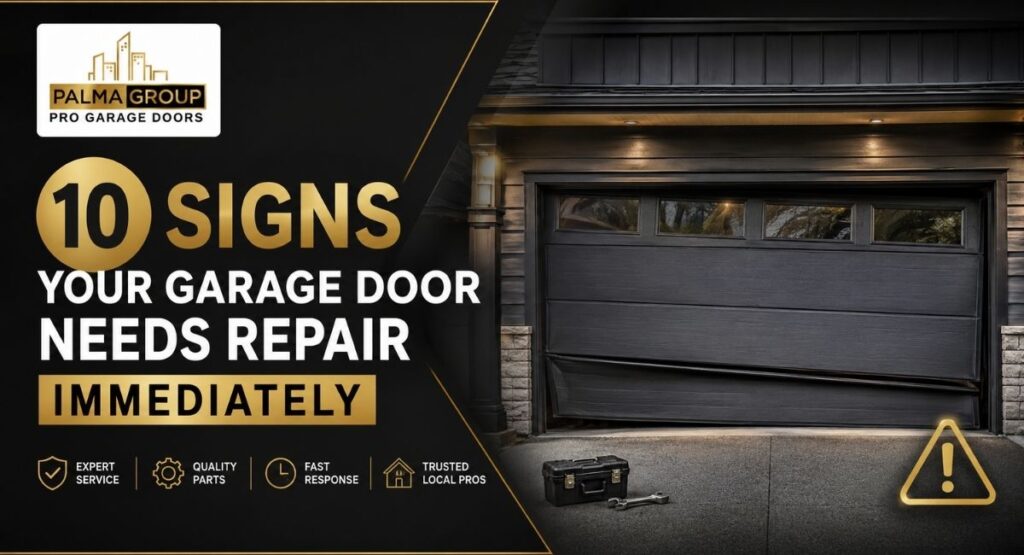
A garage door is one of those systems most homeowners barely notice until it starts acting differently. It opens in the morning, closes at night, and quietly becomes part of daily routine. The problem is that when something goes wrong, it rarely happens without warning. Most failures are preceded by small changes in sound, movement, or performance that are easy to ignore at first.
Understanding garage door repair signs early can prevent expensive breakdowns, unexpected door failure, and safety risks. A garage door is not just a panel that moves up and down. It is a weighted mechanical system that depends on springs, cables, rollers, and a motor working in balance. When one part starts weakening, the entire system begins to feel off.
Homeowners often miss early signals because the door still “works,” even if it is struggling. That is usually the stage where problems are cheapest and easiest to fix.
Before going into the warning signs, it helps to understand that even small issues can grow quickly. A slightly noisy roller today can turn into track damage or opener failure later if ignored. That is why paying attention to early garage door repair signs matters more than waiting for a full breakdown.
Why Early Garage Door Repair Signs Should Not Be Ignored
A garage door weighs hundreds of pounds and moves under constant tension. Springs carry most of that weight, while the motor only assists movement. When the balance shifts, other parts begin compensating, which leads to faster wear.
Ignoring early signs often leads to:
- Higher repair costs due to secondary damage
- Motor burnout from overuse
- Bent tracks or misaligned doors
- Sudden door failure that can trap vehicles
- Increased safety risks for household members
What starts as a minor sound or delay can gradually turn into a full system failure. This is why technicians often stress early inspection instead of waiting for complete breakdowns.
Many homeowners also refer to maintenance resources like garage door maintenance and safety guidance or repair-focused details such as broken garage door spring repair in Florida to better understand how each part affects performance.
1. Loud or Unusual Noises During Operation
A properly working garage door should not be distracting. It will make some mechanical sound, but it should be smooth and consistent. When you start hearing grinding, squeaking, rattling, or banging, it usually signals early garage door repair signs.
Noise changes often point to worn rollers, dry hinges, or spring tension issues. For example, a squeaking sound usually comes from lack of lubrication, while grinding often suggests metal components rubbing under stress.
These sounds should not be ignored because they usually appear before visible damage occurs.
2. Door Feels Heavier or Moves Slower Than Before
If the garage door starts opening or closing slower than usual, it is often a sign that the system is under strain. This is one of the most common early garage door repair signs homeowners notice but often delay addressing.
The cause is usually related to weakening springs or increased friction in the system. When springs lose tension, the motor has to do more work than it was designed for, which shortens its lifespan.
A properly balanced door should feel almost weightless when operated manually.
3. Door Does Not Fully Open or Close
A door that stops halfway or refuses to close completely is signaling a functional issue that should not be ignored. This problem often relates to sensor misalignment, track obstruction, or mechanical imbalance.
Beyond inconvenience, this also creates security concerns since the home may be left partially exposed.
4. Door Looks Uneven or Moves Crooked
A garage door should always move in a straight and balanced line. If one side appears lower than the other, it usually means a cable or spring issue is developing.
This is considered a higher-risk warning because imbalance puts uneven pressure on the entire system. Over time, this can damage tracks and strain the opener motor.
5. Door Reverses While Closing Without Reason
Garage doors are designed with safety sensors that prevent accidents, but when a door reverses unexpectedly, it often points to a system issue.
Sometimes it is a simple sensor alignment problem, but it can also indicate obstruction in the track or wiring faults. If this happens repeatedly, it should be inspected sooner rather than later.
6. Visible Wear on Springs, Cables, or Hardware
A quick visual check can reveal important garage door repair signs before they become serious. Springs, cables, and brackets are under constant tension, and even small damage can escalate quickly.
Some visible signs include fraying cables, rust forming on springs, or loose mounting brackets. These components are critical to safe operation and should never be left damaged.
7. Door Vibrates or Shakes While Moving
A smooth garage door should glide without shaking. If vibration becomes noticeable, it usually indicates roller wear, track misalignment, or loose hardware.
This type of issue often worsens over time and can lead to panel damage if not addressed.
8. Opener Sounds Like It Is Struggling
The garage door opener should not sound like it is under heavy strain. If the motor hums loudly or struggles to lift the door, it is usually reacting to imbalance in the system.
Weak springs are a common cause because the motor compensates for extra weight. This can lead to premature motor failure if ignored.
9. Door Gets Stuck or Requires Manual Assistance
A door that gets stuck mid-way or requires manual help is already showing mechanical resistance. This often comes from track issues, worn rollers, or spring tension problems.
At this stage, continued use can make the problem worse and affect multiple components.
10. Excess Noise Combined with Movement Instability
When vibration, noise, and uneven movement happen together, it is often a sign that the system is close to failure. This combination usually points to multiple worn components working under strain at the same time.
Common Garage Door Symptoms and What They Usually Mean
| Symptom | Likely Cause | Severity |
| Loud grinding or squeaking | Worn rollers or dry parts | Medium |
| Slow movement | Weak springs or motor strain | Medium to High |
| Uneven door movement | Cable or spring imbalance | High |
| Door reversing | Sensor or track issue | Medium |
| Door stuck mid-operation | Mechanical obstruction | High |
This simple breakdown helps homeowners understand how small symptoms connect to larger mechanical issues.
Why Professional Inspection Matters for Garage Door Repair Signs
While small maintenance tasks like lubrication can be done at home, most garage door repair signs involve high-tension components that require proper tools and experience. Springs in particular store significant force and can be unsafe to adjust without training.
Professional inspection also helps detect hidden wear inside rollers, cables, and track alignment that may not be visible during a basic check.
Many homeowners rely on structured support such as garage door repair solutions or routine maintenance like garage door tune-up services to keep systems operating safely and consistently throughout the year.
Final Thoughts on Garage Door Repair Signs
Recognizing garage door repair signs early can help homeowners avoid sudden breakdowns, expensive repairs, and possible safety risks. Small changes such as unusual noise, slow movement, shaking, or uneven operation often appear before a bigger issue develops. Paying attention to these warning signs gives you enough time to fix the problem before it becomes more serious.
A garage door is a high tension mechanical system, so any sign of strain should be handled without delay. Timely repairs and regular maintenance can improve performance, extend the system’s life, and make daily use safer. For local homeowners, choosing a trusted service for garage door repair in Coconut Creek, FL can make it easier to deal with these issues before they turn into major problems.
Palma Group FL offers professional garage door inspection, repair, and maintenance services designed to keep systems working safely, smoothly, and reliably over time.
Helpful Resources: