



Garage doors rarely fail without warning.
Most problems begin quietly. A roller starts making noise. The opener hesitates for a second longer than usual. The springs begin losing tension. Tracks collect debris. Hinges loosen from vibration.
Many homeowners across South and Southwest Florida ignore these early signs because the garage door still opens and closes. Then one humid morning, the system stops halfway, slams shut unexpectedly, or refuses to move at all.
Florida weather creates unique challenges for garage doors. Heat, humidity, salt air, heavy rain, and constant daily use accelerate wear on moving components. Homeowners in Boca Raton, Naples, Coral Springs, Coconut Creek, Boynton Beach, and nearby coastal communities often experience garage door issues earlier than homeowners in drier climates.
That is why learning how to maintain garage door systems properly is one of the smartest ways to reduce repair costs and extend the lifespan of the entire setup.
Preventive maintenance does more than reduce noise. It protects springs, rollers, cables, tracks, hinges, seals, and openers from premature wear. It also improves safety, especially for households using the garage as the primary home entrance.
This guide explains everything Florida homeowners need to know about garage door maintenance, including:
- How to maintain a garage door safely
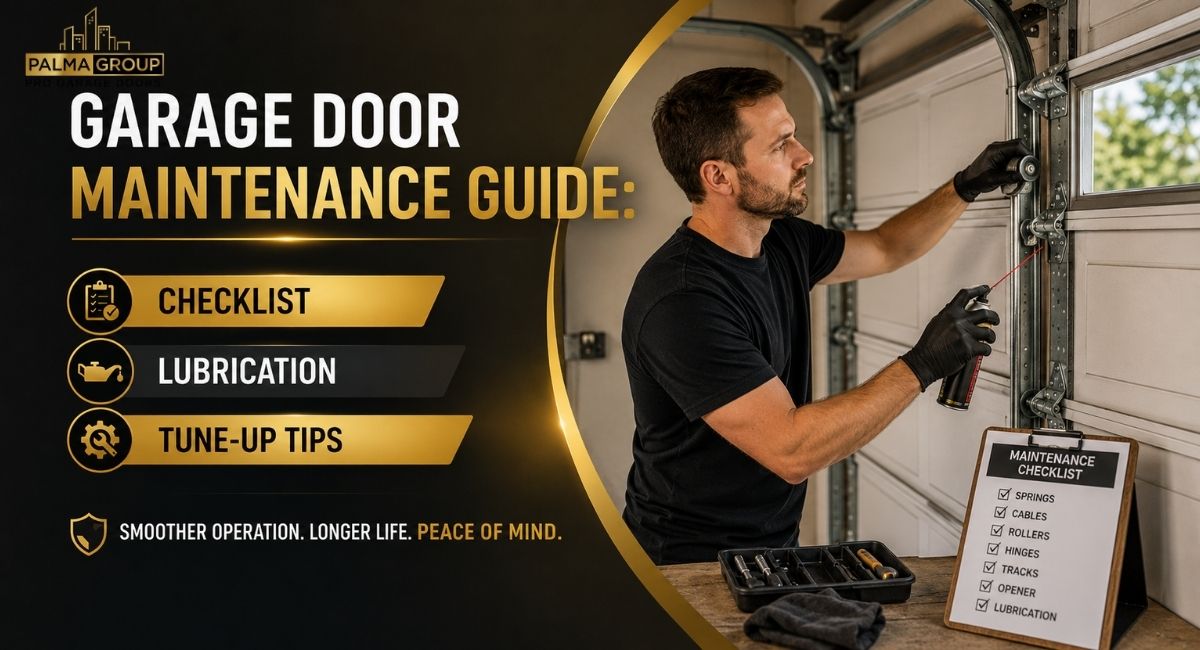
- A complete garage door maintenance checklist
- How often to lubricate garage door systems
- How often should you lubricate your garage door
- How to tune up garage door components
- Warning signs of hidden damage
- Seasonal maintenance tips for humid climates
- DIY maintenance versus professional inspections
By the end of this article, you will understand how a few simple maintenance habits can prevent expensive repairs and improve long-term reliability.
Why Garage Door Maintenance Matters More in Florida
Garage doors in Florida experience heavier environmental stress than many homeowners realize.
A garage door is one of the largest moving systems in a home. Every opening cycle places pressure on:
- Springs
- Rollers
- Hinges
- Tracks
- Cables
- Bearings
- Opener motors
- Weather seals
In Florida, those moving parts also deal with:
- High humidity
- Salt-heavy coastal air
- Intense heat
- Frequent storms
- Moisture buildup
- Corrosion risk
Over time, lack of maintenance causes small problems to spread across the entire system.
For example:
- Dry rollers increase track friction
- Friction strains the opener motor
- Strain weakens cables and hinges
- Unbalanced movement stresses springs
- Springs wear out faster
This chain reaction explains why neglected garage doors often require multiple repairs at once.
Regular maintenance helps homeowners:
- Prevent emergency breakdowns
- Extend component lifespan
- Reduce repair costs
- Improve operating safety
- Minimize noise and vibration
- Protect opener motors
- Prevent rust and corrosion
How Often Should You Maintain Your Garage Door?
Many homeowners ask how often to maintain a garage door. A consistent approach guided by a structured garage door maintenance checklist makes scheduling inspections much easier and more effective.
The answer depends on:
- Climate exposure
- Usage frequency
- Door size
- Door material
- Coastal proximity
- Age of the system
For most South Florida homes, a basic inspection every three months is ideal.
A full maintenance routine should typically happen every six months.
Homes near coastal areas such as Naples, Lighthouse Point, and Boca Raton may benefit from more frequent lubrication and corrosion checks because salt air accelerates rust formation.
Families using the garage as the main entrance should also perform maintenance more often due to increased cycle usage.
Complete Garage Door Maintenance Checklist
This preventive garage door maintenance checklist covers the most important areas homeowners should inspect regularly.
| Maintenance Task | Recommended Frequency |
| Lubricate rollers and hinges | Every 3 to 6 months |
| Inspect springs for rust | Every 3 months |
| Tighten hardware | Every 6 months |
| Test door balance | Every 6 months |
| Clean tracks | Every 3 months |
| Inspect weather seals | Twice yearly |
| Test safety reversal system | Monthly |
| Check cables for fraying | Every 3 months |
| Inspect opener settings | Every 6 months |
Preventive maintenance is far less expensive than emergency repairs caused by neglected components.
How to Maintain a Garage Door Step by Step
Proper maintenance does not require advanced mechanical experience.
Most homeowners can safely handle basic inspections and lubrication.
However, high-tension spring adjustments should always be approached carefully.
Step 1: Disconnect the Garage Door Opener
Before beginning any inspection:
- Unplug the opener
- Pull the emergency release cord
- Keep the door in the closed position
This prevents accidental movement.
Step 2: Listen During Operation
Open and close the garage door manually.
Pay attention to:
- Grinding sounds
- Squeaking
- Jerking motion
- Delayed response
- Uneven movement
- Vibrations
Unusual sounds often identify problems early.
Step 3: Inspect the Rollers
Garage door rollers wear gradually.
Look for:
- Cracks
- Flat spots
- Wobbling
- Rust buildup
- Excessive noise
Nylon rollers generally operate more quietly than metal rollers.
If rollers shake or bind during movement, replacement may already be necessary.
Step 4: Check the Springs
Springs carry most of the garage door’s weight.
Inspect for:
- Rust
- Gaps in coils
- Stretching
- Uneven tension
- Corrosion
Never attempt to loosen or remove torsion springs without proper tools and training.
If springs appear damaged, professional inspection is safer.
Additional information about spring problems is available here:
How to Repair Garage Door Spring: Florida’s Homeowner Guide
Step 5: Inspect Garage Door Cables
Cables work alongside springs to support the door.
Check for:
- Fraying
- Loose strands
- Rust
- Slack tension
Damaged cables can fail suddenly.
If fraying is visible, replacement should happen immediately.
Step 6: Clean the Tracks
Garage door tracks collect:
- Dust
- Leaves
- Sand
- Salt residue
- Grease buildup
Use a dry cloth or vacuum attachment.
Avoid heavy grease inside tracks because it attracts more debris.
Step 7: Tighten Loose Hardware
Garage doors vibrate constantly.
Over time, bolts and brackets loosen naturally.
Inspect:
- Hinges
- Roller brackets
- Track mounts
- Opener mounting brackets
Use a socket wrench carefully.
Do not overtighten.
Step 8: Test Door Balance
Disconnect the opener.
Lift the door halfway manually.
A balanced garage door should stay in position.
If it drifts upward or falls downward, spring tension may require adjustment.
Step 9: Test the Auto Reverse Safety System
Modern garage door openers include safety reversal sensors.
Place an object beneath the closing door.
The door should reverse immediately upon contact.
Also verify that photo-eye sensors are aligned and clean.
Step 10: Inspect Weather Seals
Florida storms and humidity wear out bottom seals quickly.
Inspect for:
- Cracking
- Gaps
- Brittle rubber
- Water intrusion
Weather seals improve energy efficiency and help prevent pests from entering the garage.
How Often to Lubricate Garage Door Components
One of the most common homeowner questions is:
How often should you lubricate your garage door?
In Florida climates, lubrication every three to six months is generally recommended.
Coastal homes may benefit from more frequent lubrication because salt exposure accelerates corrosion.
Parts That Require Lubrication
Proper lubrication reduces friction and prevents premature wear.
Lubricate:
- Rollers
- Hinges
- Springs
- Bearings
- Pulleys
- Arm bars
Avoid lubricating:
- Tracks
- Sensor lenses
- Nylon roller wheels without bearings
Best Lubricants for Garage Doors
Silicone-based lubricants are commonly recommended for humid climates because they resist moisture better than standard oils.
White lithium grease is another option for metal-to-metal contact points.
Avoid using:
- WD-40 as primary lubricant
- Heavy grease on tracks
- Motor oil
WD-40 works better as a cleaner or rust remover rather than long-term garage door lubrication.
How to Tune Up Garage Door Systems Properly
Many homeowners search for how to tune up garage door systems after noticing noise or inconsistent movement.
A tune-up combines inspection, lubrication, balance testing, and minor adjustments.
Basic Garage Door Tune-Up Checklist
- Lubricate moving parts
- Tighten hardware
- Test opener force settings
- Inspect spring tension
- Clean tracks
- Test safety systems
- Check cable condition
- Verify roller alignment
- Inspect weather stripping
- Test manual release function
Professional garage door technicians often perform these tune-ups annually.
For older systems, tune-ups can identify hidden wear before major failures occur.
Common Signs Your Garage Door Needs Maintenance
Garage doors usually show warning signs before complete failure.
Increased Noise
Grinding, squeaking, or rattling often indicates dry rollers or loose hardware.
Slow Door Movement
Openers may struggle because of friction or spring imbalance.
Uneven Motion
One side lifting faster than the other may indicate spring or cable issues.
Delayed Opener Response
Electrical or motor strain may already be developing.
Shaking During Operation
Track misalignment or worn rollers commonly cause vibration.
Door Reverses Unexpectedly
Sensor alignment problems or opener force setting issues may exist.
If your garage door stops functioning completely, this troubleshooting guide explains additional causes:
Why Florida Humidity Creates Garage Door Problems
Florida homeowners deal with environmental conditions that accelerate wear.
Rust Formation
Humidity and salt air corrode springs, hinges, and cables.
Swelling and Expansion
Heat causes metal expansion, affecting alignment and tension.
Moisture Damage
Water intrusion damages seals and wooden door sections.
Increased Mold and Debris
Garages collect moisture more easily in tropical climates.
This is especially common in coastal cities like Naples and Boca Raton.
Regular inspections are more important in humid climates because corrosion develops faster than many homeowners expect.
Garage Door Springs and Preventive Maintenance
Springs are among the most important parts of the garage door system.
Without proper maintenance, springs wear out faster and place extra strain on the opener.
Signs of Spring Wear
- Rust buildup
- Visible gaps
- Uneven lifting
- Loud snapping noises
- Jerking movement
Lubricating springs regularly helps reduce friction between coils.
However, lubrication alone does not stop long-term metal fatigue.
Garage Door Opener Maintenance Tips
The opener is the control center of the garage door system. When early warning signs appear, such as noise, delay, or inconsistent movement, this guide on the top warning signs your garage door needs repair can help identify whether the issue is mechanical or electrical.
Neglecting opener maintenance can shorten motor lifespan.
Inspect the Drive System
Depending on the opener type:
- Chain drive systems require lubrication
- Belt drives require inspection for wear
- Screw drives require periodic grease application
Test Backup Battery Systems
Many Florida homeowners install battery backup openers because of hurricane season power outages.
Test backup systems regularly.
Inspect Safety Sensors
Dirty or misaligned photo eyes often cause reversing problems.
Clean sensors gently using a microfiber cloth.
Verify Force and Limit Settings
Incorrect settings may cause:
- Incomplete closing
- Sudden reversal
- Excessive motor strain
The Importance of Garage Door Rollers and Hinges
Rollers and hinges support smooth door movement.
When neglected, they create friction that affects the entire system.
Signs of Roller Wear
- Cracking
- Loud vibration
- Binding in tracks
- Side-to-side wobbling
Signs of Hinge Problems
- Squeaking
- Loose mounting bolts
- Bent hinge plates
- Door section misalignment
Nylon rollers often last longer in humid environments because they resist corrosion better than steel rollers.
Real Florida Homeowner Example
A homeowner in Coconut Creek noticed occasional squeaking during garage door operation.
The issue seemed minor at first.
Over several months:
- The opener became louder
- The door began shaking
- Rollers developed flat spots
- Springs showed rust buildup
A routine maintenance inspection revealed:
- Dry hinges
- Loose track brackets
- Corroded cables
- Misaligned rollers
After lubrication, roller replacement, and hardware tightening, the system returned to smooth operation.
Without preventive maintenance, the homeowner likely would have faced a larger repair involving springs and opener components.
Homeowners searching for Coconut Creek garage door repair often experience similar issues caused by humidity and frequent garage usage.
Seasonal Garage Door Maintenance Tips for Florida Homes
Florida weather changes throughout the year affect garage doors differently.
Summer Maintenance
- Inspect weather seals for heat damage
- Lubricate springs and rollers
- Check opener overheating issues
- Remove moisture buildup
Hurricane Season Preparation
- Inspect reinforcement brackets
- Test manual release function
- Secure loose hardware
- Verify opener backup battery operation
Winter Maintenance
Florida winters are mild, but temperature shifts still affect spring tension.
Inspect balance and lubrication levels during cooler months.
DIY Garage Door Maintenance Versus Professional Service
Basic maintenance is manageable for many homeowners.
However, certain repairs require professional expertise.
Safe DIY Tasks
- Cleaning tracks
- Lubricating rollers
- Tightening hardware
- Testing safety sensors
- Inspecting weather seals
Professional Recommended Tasks
- Spring adjustments
- Cable replacement
- Track realignment
- Opener motor repair
- Torsion spring replacement
Professional technicians use specialized tools and understand safe tension handling procedures.
How Preventive Maintenance Saves Money
Many homeowners postpone garage door maintenance because the system still functions.
However, neglect usually increases repair costs later.
For example:
- Dry rollers damage tracks
- Worn springs overload openers
- Loose hinges create alignment issues
- Corroded cables eventually snap
Routine maintenance helps homeowners avoid emergency breakdowns and expensive part replacements.
This article about garage door repair pricing explains how neglected maintenance often increases overall repair costs:
Area Specific Garage Door Maintenance Challenges in South Florida
Different Florida communities face slightly different maintenance concerns, especially due to humidity, salt exposure, and daily usage patterns. Proper preventive care helps reduce long-term wear in these environments.
Homeowners dealing with humidity and heavy seasonal rain in Coral Springs often notice faster corrosion on springs, rollers, and cables. Regular lubrication and inspection are essential to prevent premature system failure.
Our local service support for garage door replacement in Coral Springs and nearby areas across South and Southwest Florida is provided by trusted technicians who provide fast response, reliable diagnostics, and professional repair solutions for all types of garage door issues.
Should You Schedule Annual Professional Inspections?
For many Florida homeowners, annual professional inspections are worthwhile.
Technicians can identify:
- Early spring fatigue
- Hidden cable wear
- Track alignment problems
- Opener force issues
- Bearing wear
- Structural door problems
Professional tune-ups often prevent larger repairs later.
This is especially important for older garage door systems exposed to humid coastal conditions.
Signs It May Be Time for a New Garage Door
Maintenance can extend lifespan significantly.
However, some systems eventually become too worn or outdated.
Warning Signs Include:
- Repeated spring failures
- Extensive rust damage
- Sagging door sections
- Severe track damage
- Constant repair needs
- Poor hurricane resistance
In some situations, replacing the full system becomes more cost-effective than continuing repeated repairs.
Frequently Asked Questions
How often should you lubricate your garage door?
What lubricant works best for garage doors?
Can I use WD-40 on my garage door?
How do I know if my garage door springs need maintenance?
Why is my garage door louder than before?
How long do garage doors typically last in Florida?
Should I maintain my garage door myself or hire a professional?
Final Thoughts
Consistent preventive care combined with a proper garage door maintenance checklist and awareness of early failure symptoms from top signs your garage door needs repair ensures long-term reliability and reduces emergency repair costs across Florida homes.
Learning how to maintain garage door systems properly is one of the most practical ways to protect your home, reduce repair costs, and improve long-term reliability.
Garage doors operate under constant mechanical stress. In Florida climates, humidity, salt air, and heat accelerate wear on springs, rollers, cables, hinges, and opener systems.
The good news is that preventive maintenance does not require complicated tools or advanced technical experience.
Simple habits such as regular lubrication, hardware inspections, balance testing, and track cleaning can dramatically extend the lifespan of your garage door system.
For homeowners across South and Southwest Florida, routine maintenance is especially important because coastal conditions create additional corrosion risks that many homeowners underestimate.
For professional help and reliable service, contact a garage door replacement company in Parkland for inspections, repairs, and full system replacement when needed.
If your garage door is already showing signs of noise, imbalance, delayed movement, or vibration, addressing those problems early can prevent larger repairs later.
For more information about garage door repair, maintenance, and installation services across Florida communities, visit our website at palmagroupfl.com.