Your garage door failed during the last named storm, or maybe it just looks tired after two seasons of salt air and sun. Either way, you are now standing in your driveway asking a question that thousands of homeowners across Boca Raton, Naples, and Coral Springs ask every year: which garage door material actually holds up here?
Florida is not a normal climate for a garage door. The combination of humidity, salt exposure near the coast, intense UV, and hurricane force wind requirements means a door that performs beautifully in Ohio can fail within a few years in South Florida or Southwest Florida. Picking the wrong material is not just a cosmetic mistake. It can mean early rust, warping, higher energy bills, and in the worst case, a door that does not meet the wind load requirements your home actually needs.
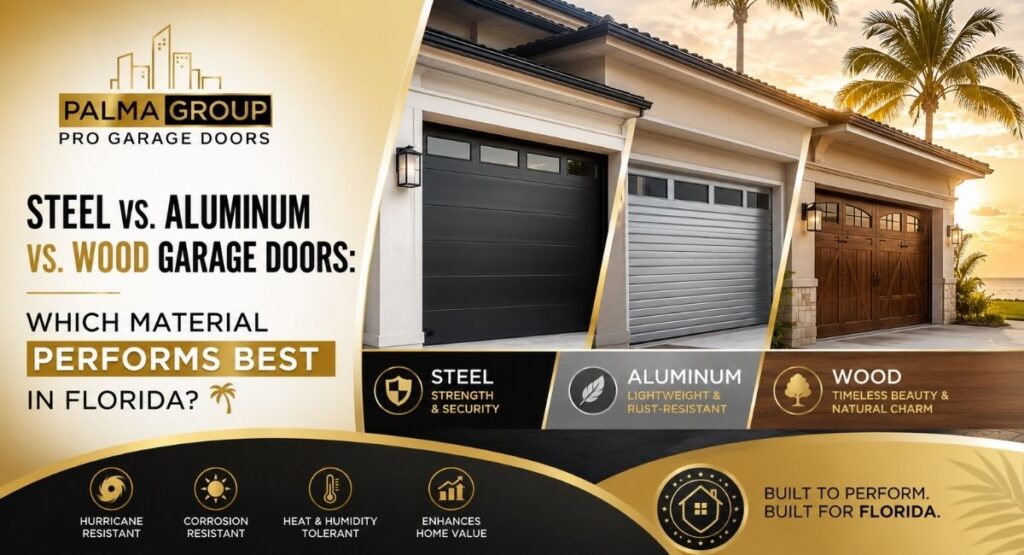
This guide breaks down steel, aluminum, and wood garage doors specifically for Florida conditions. No generic advice. Just a clear look at how each material handles humidity, salt air, storms, and daily Florida heat, so you can make a decision that holds up for the long run.
Why Garage Door Material Matters More in Florida Than Almost Anywhere Else
In most parts of the country, a garage door is chosen based on style and budget. In Florida, material choice is closer to a structural decision.
The state sits in a hurricane zone, which means garage doors are subject to strict wind load requirements under the Florida Building Code. A garage door is one of the largest openings on a home, and if it fails during a storm, wind can enter the structure and cause pressure that damages the roof and walls from the inside. This is why Florida code treats garage doors as a life safety component, not just an entry point for your car.
On top of wind resistance, Florida adds three more stress factors that most other states do not deal with at the same intensity:
Humidity. Average relative humidity in South Florida often sits above 70 percent for most of the year. Materials that absorb moisture or trap it against metal components degrade faster here than almost anywhere else in the continental United States.
Salt air. Homes within a few miles of the coast, which includes large parts of Boca Raton, Lighthouse Point, and Naples, are exposed to airborne salt that accelerates corrosion on untreated or poorly coated metal.
UV exposure and heat. Florida gets some of the highest annual UV index readings in the country. Materials that are not UV stabilized can fade, become brittle, or lose structural integrity years before their expected lifespan.
Understanding how steel, aluminum, and wood respond to these four factors, wind load, humidity, salt exposure, and UV, is the real foundation for choosing the right door.
Steel Garage Doors in Florida
Steel is the most common garage door material installed in Florida, and for good reason. It offers the best combination of strength, wind resistance, and price for most homeowners.
Strength and Wind Load Performance
Steel garage doors are typically built in multiple layers, with a steel skin on both sides and a rigid foam core in between. This construction, often called sandwich construction, gives steel doors excellent resistance to wind pressure. Manufacturers like Clopay and Amarr test their steel door lines against ASTM standards for wind load and impact resistance, which is what allows these doors to carry the certifications needed to meet Florida Building Code requirements in high velocity hurricane zones.
For homes in coastal counties, this matters directly. A steel door rated for the correct wind zone is engineered to flex and hold under pressure without buckling, and reinforced steel doors can also carry impact ratings that protect against wind borne debris.
Corrosion Resistance
This is where steel needs a closer look. Raw steel rusts quickly in humid, salty air. What protects a steel garage door in Florida is the coating, not the base metal. Quality steel doors use a galvanized steel layer combined with a baked on primer and paint finish. This layered protection is what actually resists corrosion, not the steel itself.
The practical implication is that not all steel doors perform the same in Florida. A steel door with a thin, single layer coating installed a few blocks from the beach in Boynton Beach or Margate will show rust at the bottom panels and hardware within a few years. A properly coated, hurricane rated steel door from a reputable manufacturer can last 20 to 25 years even in coastal exposure, provided it gets basic maintenance.
Insulation and Energy Performance
Many steel doors sold today are insulated doors, meaning they include a polyurethane or polystyrene core between the steel layers. In Florida, this insulation does more than help with energy bills. It reduces heat transfer into the garage, which matters if the garage is attached to living space or used as a workshop. Insulated steel doors also tend to be quieter and more resistant to minor dents, since the foam core adds rigidity.
Maintenance Requirements
Steel doors need periodic inspection of the coating, especially near the bottom panel where water pools and salt residue collects. Rinsing the door with fresh water every few weeks in coastal areas, checking for chipped paint, and touching up exposed metal quickly prevents small rust spots from spreading. Hardware such as hinges, rollers, and tracks also needs attention, since these components are often the first to corrode even when the panels themselves hold up well. A basic seasonal check of hardware can catch problems before they turn into a full repair.
Aluminum Garage Doors in Florida
Aluminum is the second most common material choice in Florida, particularly for coastal properties and modern architectural styles.
Corrosion Resistance
Aluminum does not rust the way steel does. Instead, it forms a thin oxide layer that actually protects the metal underneath from further corrosion. This makes aluminum a strong choice for homes directly on the coast, where salt exposure is constant. For properties in areas like Lighthouse Point or barrier island communities near Naples, this corrosion resistance is often the deciding factor.
Strength and Wind Load Considerations
Aluminum is lighter than steel, which has both advantages and drawbacks. The lighter weight puts less strain on the garage door opener and track system, and it is easier to operate manually if needed. However, aluminum is also less rigid than steel at the same thickness, so aluminum doors built for wind load compliance typically use thicker gauge material or additional internal reinforcement to meet the same wind pressure ratings required by the Florida Building Code.
This means a well engineered aluminum door can absolutely meet hurricane requirements, but the design and reinforcement matter more than with steel. Homeowners should confirm the specific wind load rating and impact rating of any aluminum door rather than assuming aluminum automatically performs the same as steel.
Humidity and UV Resistance
Aluminum handles humidity well since moisture does not cause the same corrosion reaction it does with untreated steel. It also holds up reasonably well under UV exposure, though powder coated finishes fade more slowly than standard paint finishes over years of Florida sun.
Maintenance Requirements
Aluminum doors generally require less maintenance related to corrosion, but they are more prone to denting than steel, since the material is softer. A stray bump from a car bumper or a bike can leave a visible dent that is harder to repair than on a heavier steel panel. Homeowners should also check that hardware and hinges, which are often steel even on an aluminum door, are properly coated to prevent corrosion at the connection points.
Wood Garage Doors in Florida
Wood garage doors bring a level of curb appeal that steel and aluminum struggle to match, especially on custom or historic style homes. But Florida’s climate is genuinely the hardest environment in the country for wood doors to survive long term.
Humidity Resistance
Wood is a natural material, and it absorbs and releases moisture constantly. In a climate where humidity rarely drops below 60 percent, this creates a cycle of swelling and shrinking that stresses joints, seams, and panel edges. Over time, this movement can lead to warping, cracking, or separation at the panel seams if the door is not properly sealed and maintained.
Corrosion Resistance and Rot
Wood does not corrode like metal, but it is vulnerable to rot, mold, and insect damage, all of which are more common in warm, humid climates. Coastal salt air also degrades exterior finishes faster, meaning a wood door needs more frequent refinishing near the ocean than the same door would need inland.
Wind Load Performance
Wood garage doors can be engineered to meet Florida Building Code wind load requirements, and some higher end wood composite doors carry ASTM tested ratings. However, achieving these ratings typically requires thicker panels, reinforced framing, and higher cost construction compared to steel or aluminum doors built for the same wind zone.
Maintenance Requirements
This is the real tradeoff with wood. A wood garage door in Florida needs resealing or repainting roughly every one to two years to maintain both its appearance and its protection against moisture. Skipping this maintenance accelerates warping and rot significantly faster than in drier climates. For homeowners who want the wood look without the maintenance burden, some manufacturers now offer steel or composite doors with wood grain finishes that mimic the appearance while keeping the corrosion resistance of steel.
Side by Side Comparison
| Factor | Steel | Aluminum | Wood |
| Wind load performance | Strong, widely available in hurricane rated options | Good, requires thicker gauge or reinforcement | Possible but costly to reach high ratings |
| Corrosion resistance | Depends on coating quality | Naturally resistant | Not applicable, but prone to rot |
| Humidity resistance | Good with proper coating | Good | Weak, prone to swelling and warping |
| Maintenance requirements | Low to moderate | Low | High, frequent refinishing needed |
| Typical lifespan in Florida | 20 to 25 years | 20 to 25 years | 10 to 15 years without diligent care |
| Relative cost | Moderate | Moderate to higher | Highest |
Which Material Performs Best by Florida Region
South Florida and Southwest Florida are not identical environments, and the right material can shift slightly depending on exposure.
Direct coastal properties, including parts of Naples, Lighthouse Point, and Boca Raton within a mile or two of the water, tend to favor aluminum for its natural corrosion resistance, or a heavily coated, hurricane rated steel door if a homeowner wants the stronger wind performance steel typically offers.
Inland communities, such as Coral Springs, Coconut Creek, Parkland, Plantation, and Golden Gate Estates, deal with less salt exposure, which makes steel a very practical choice since coating durability is less of a concern away from the coast.
Established neighborhoods with architectural wood detailing, including some areas around Boynton Beach and Margate, may still prefer wood for aesthetic reasons, but should budget for more frequent upkeep than metal alternatives require.
What the Florida Building Code Actually Requires
Every garage door installed in Florida needs to meet wind load and, in many coastal counties, impact resistance requirements tied to the Florida Building Code. These requirements are based on the property’s wind zone, which is determined by location and proximity to the coast. A door that is not properly rated for its zone is not just a compliance issue. It represents a real risk during storm season, since an under rated door is more likely to fail under wind pressure.
Manufacturers such as Clopay and Amarr publish wind load and impact ratings for their product lines, and any legitimate installer should be able to confirm which specific door models are rated for a given address. This is one area where it pays to work with a company that installs and services doors daily in Florida conditions rather than relying on national online retailers who may not account for local code requirements.
Insulation Considerations Across All Three Materials
Regardless of which material a homeowner chooses, insulated doors offer a real benefit in Florida. An insulated garage door reduces heat transfer, which matters most when the garage sits below a bonus room, next to a laundry area, or is used as a home gym or workshop. Steel doors most commonly offer insulated options with a foam core between two steel skins. Aluminum doors can also be built with insulated panels, though they are slightly less common. Wood doors are rarely insulated in the same layered way, since the wood itself has some natural insulating properties but nowhere near the R value of a foam core door.
Replacing a Storm Damaged Door
Consider a homeowner in a coastal Boca Raton neighborhood whose garage door buckled during a strong summer storm. The original door was an older steel model without a proper wind rating, installed before current code requirements were common. After the storm, the homeowner needed a replacement that met current Florida Building Code wind load standards for the property’s zone.
In a case like this, the choice usually comes down to a properly rated, insulated steel door with a strong factory coating, or an aluminum door reinforced to meet the same wind rating. The decision often depends on budget, distance from the coast, and whether the homeowner wants the added insulation benefit that steel doors commonly include. This kind of replacement is a good example of why professional guidance during a new garage door installation matters, since the correct wind rating for one property is not automatically correct for a home two streets away with different exposure.
Cost Versus Long Term Value
Upfront cost is only part of the picture. A cheaper door with a short lifespan in Florida’s climate often costs more over time once repairs, repainting, and early replacement are factored in.
Steel doors generally offer the strongest balance of upfront cost and long term durability. Aluminum tends to cost slightly more upfront in comparable hurricane rated configurations but can save on long term corrosion related maintenance near the coast. Wood carries the highest lifetime cost in Florida due to the frequency of refinishing and the shorter realistic lifespan without diligent care.
Homeowners weighing these tradeoffs often find it useful to review current garage door repair cost in Florida figures alongside installation pricing, since ongoing repair costs vary significantly by material and by how well a door was maintained.
Signs Your Current Door Material Is Failing in Florida’s Climate
Certain warning signs point directly to a material struggling with local conditions rather than simple age:
Rust bleeding through paint on steel panels, especially near the bottom edge, points to coating failure rather than the steel itself being defective.
Swelling, cracking, or gaps at panel seams on a wood door usually means moisture has worked past the sealant and into the wood itself.
Dents or pitting on aluminum panels near the coast can indicate the door is taking more physical impact than the gauge of aluminum was designed to handle.
Doors that visibly bow or flex during high wind, even without full failure, suggest the wind load rating may not match current code requirements for the property. Recognizing these top signs your garage door needs repair early can prevent a small issue from becoming a full replacement situation during storm season.
Maintenance Checklist by Material
Keeping any garage door performing well in Florida comes down to consistent, material specific care.
For steel doors, rinse off salt residue every few weeks near the coast, inspect the bottom panel and hardware for early rust, and touch up any chipped paint quickly.
For aluminum doors, check for dents after any impact, confirm hardware connections are corrosion resistant, and clean the surface periodically to maintain the finish.
For wood doors, reseal or repaint on a one to two year cycle, inspect for soft spots or discoloration that indicate moisture intrusion, and keep the bottom seal in good condition to block water from reaching the panel edges.
A broader garage door maintenance checklist covering springs, tracks, and openers is worth following regardless of material, since these components affect performance just as much as the door panels themselves.
How Material Choice Affects Home Value
Garage doors are one of the more visible exterior features on a home, and the material and condition of that door genuinely affects curb appeal and resale value. A well maintained steel or aluminum door with a modern finish can meaningfully improve a home’s exterior appearance, while a worn, water damaged wood door can have the opposite effect during a sale. For homeowners weighing a replacement partly for resale reasons, it is worth reviewing how a new garage door can increase a home’s value before deciding on material and style.
Garage Door Material FAQs
Which garage door material lasts longest in Florida’s humidity?
Steel and aluminum both generally outlast wood in Florida’s humidity, provided the steel has a quality corrosion resistant coating. Wood requires far more frequent maintenance to reach a comparable lifespan.
Do all steel garage doors meet Florida’s hurricane wind load requirements?
No. Wind load and impact ratings vary by model and manufacturer. A steel door must be specifically rated and tested under ASTM standards for the wind zone of the property to meet Florida Building Code requirements.
Is aluminum a good choice for homes directly on the coast?
Yes, aluminum’s natural resistance to corrosion makes it a strong option for coastal properties, as long as the specific door model meets the required wind load rating for that location.
How often does a wood garage door need to be resealed in Florida?
Most wood garage doors in Florida need resealing or repainting every one to two years to prevent moisture damage, warping, and rot.
Can an insulated garage door help with energy costs in Florida?
Yes. Insulated doors reduce heat transfer into the garage, which can help regulate temperature in attached garages or garages used as living or working space, and may modestly reduce cooling costs.
What is the biggest mistake homeowners make when choosing a garage door material in Florida?
The most common mistake is focusing only on appearance or price without confirming the door’s wind load and impact rating matches the home’s actual wind zone under the Florida Building Code.
Final Takeaway
There is no single material that wins in every Florida scenario, but the pattern is clear. Steel offers the strongest overall balance of wind performance, cost, and durability for most South Florida and Southwest Florida homes. Aluminum is the better choice for properties with heavy direct coastal exposure where corrosion resistance is the priority. Wood delivers the most distinctive look but demands the most ongoing care to survive Florida’s humidity and salt air without warping or rot.
The right decision depends on how close a home sits to the coast, the wind zone it falls under, and how much ongoing maintenance a homeowner is realistically willing to commit to. Getting the wind load rating and coating quality right matters far more than the material label alone.
If your current garage door is showing signs of wear, rust, or storm damage, or if you are unsure whether it meets current Florida Building Code requirements for your area, Palma Group Pro Garage Doors can assess your specific property and wind zone and recommend the right material and door for long term performance. Our team works throughout South Florida and Southwest Florida, including Garage Door Replacement in Boca Raton, Naples, Coral Springs, and Plantation, and can walk you through options that fit both your budget and your home’s exposure.
Helpful Resources